
British Ordnance Collectors Network
You are using an out of date browser. It may not display this or other websites correctly.
You should upgrade or use an alternative browser.
You should upgrade or use an alternative browser.
US nose fuze with extension rod
- Thread starter Antoon
- Start date

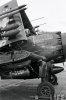

The only US impact four vanes nose fuze I found in my doc is the Mk 239, but never seen or read with an impact rod
Yoda
Yoda


The picture confuses me just a little. US bombs of the period were made with two lugs on one side, one lug on the other. According to all references I've seen, this was so that US made bombs could be used by either US (2 lug) or British aircraft (1 lug). This appears to be a US airplane in the picture, why are the bombs hung using the 1 lug suspension? I'm not an airplane guy, but this is contrary to what I've long understood.

That plane is a Douglas A-1 (series) Skyraider. Reading up on it, any weight reduction possible was put into it. Since there were a total of seven hard points per wing, one centerline for a total of fifteen and a payload of 8,000lbs, I guess if the bomb had accommodation for single lug use, it would save that little bit of weight for the hard point. I assume max weight for each hard point at 500lbs and centerline at a max of 2000lbs to 4000lbs, since it is mentioned that torpedoes could be carried. Very good bird.
It would appear to be an AD-4, BuNo 123933 of VA-195, USS Princeton, flown by LTJG Edward 'Ed' Phillips. Having now looked at countless images of hardpoints on Skyraiders, it seems that the hardpoints on this aircraft are very short and thin compared to those on other Skyraiders.
TimG
TimG
From what I can gather, this Skyraider is fitted with 'Bomb Rack Mk. 55', which are only 13" long and utilise single point suspension. They are wiring compatible with rocket pylons. The AD-4 model could carry 14 rockets.
The attached are extracts from the "Aviation Ordnancemans' Manual" 1958.
TimG
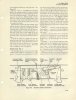
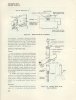
The attached are extracts from the "Aviation Ordnancemans' Manual" 1958.
TimG
Last edited:
The fuze would appear to be "Fuze, Nose, AN-Mk 219" fitted with "Anti Personnel Bomb Fuze Extension" (no further details).
TimG
View attachment OP 1664, US Explosive Ordnance, Volume 2.pdf
TimG
View attachment OP 1664, US Explosive Ordnance, Volume 2.pdf

Hallo TimG !!! The AN-M 219 can be seen on my HP www.harryszuenderecke.de. Harry