
British Ordnance Collectors Network
You are using an out of date browser. It may not display this or other websites correctly.
You should upgrade or use an alternative browser.
You should upgrade or use an alternative browser.
Us/Uk 57mm?
- Thread starter Lou
- Start date

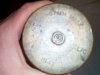
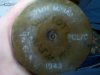

I've always been told that the Broadarrow mark was UK, but I've also been told the CL/C is Canadian. I have a 76mm M26 case marked exactly the same, Broadarrow on one side, and CL/C on the other. One thing to take into consideration, is that the UK gun ammo was labeled 6Pdr Mk. 7 on the headstamp, whereas the U.S. was the 57mm M23 as stamped on your case. By the way, I checked my 57mm stuff, and I have case stamped just like yours.
I hope our mates across the pond can straighten us out and put an end to the rumors. Hey guys, who can define the exact meaning of the presence of the Broadarrow stamped on ordnance, expecially case heads?
Thanks,
John
I hope our mates across the pond can straighten us out and put an end to the rumors. Hey guys, who can define the exact meaning of the presence of the Broadarrow stamped on ordnance, expecially case heads?
Thanks,
John
Last edited:
Chris 42 RQ
Well-Known Member
Crows Feet aka Broad Arrow marks
Most home produced UK Ordnance bears the "Crows foot" or "Broad Arrow" as a sign of belonging to the Government.
During the 2WW a lot of collaboration went on between Britain and Canada and continued for a long time afterwards with projects being shared and ideas tested out by both parties.
I have a 77 MM 17 Pounder APPC/T projectile made in Canada for export to the UK but this has no Broad Arrow stamped on it whereas another one I have seen made some 1,300 rounds later has the Broad Arrow on it??????
So it would appear that there is an inconsistency in marking rounds between countries.
Just as an aside here, the Government "Never relinquishes its ownership of an item marked with the Broad Arrow"-fortunately this is not a policy that is enforced or none of us would have anything left! oh:
oh:
Most home produced UK Ordnance bears the "Crows foot" or "Broad Arrow" as a sign of belonging to the Government.
During the 2WW a lot of collaboration went on between Britain and Canada and continued for a long time afterwards with projects being shared and ideas tested out by both parties.
I have a 77 MM 17 Pounder APPC/T projectile made in Canada for export to the UK but this has no Broad Arrow stamped on it whereas another one I have seen made some 1,300 rounds later has the Broad Arrow on it??????
So it would appear that there is an inconsistency in marking rounds between countries.
Just as an aside here, the Government "Never relinquishes its ownership of an item marked with the Broad Arrow"-fortunately this is not a policy that is enforced or none of us would have anything left!
oh:

Falcon
Well-Known Member
"CL/C" Is the manufacturer's mark of the Canadian Motor Lamp Co., which was located in Windsor, Ontario. Any manufacturer's marking on a British style WW2 shell with "/C" after is indicates Canadian Manufacture.
If there are two broad arrows stamped with the points facing each other to make what looks like a 6 Pointed star, then it means the item was "sold out of service" or sold as surplus.
As for ownership worries, for example, I don't think they'll want my 6 Inch Mark 5 naval case back now, as the two ships that were fitted with the guns (HMS Tiger and HMS Blake) are long gone now. It is obviosly not really an issue, as there are millions of items around with the marking on, and no one would ever come looking for them all.
If there are two broad arrows stamped with the points facing each other to make what looks like a 6 Pointed star, then it means the item was "sold out of service" or sold as surplus.
As for ownership worries, for example, I don't think they'll want my 6 Inch Mark 5 naval case back now, as the two ships that were fitted with the guns (HMS Tiger and HMS Blake) are long gone now. It is obviosly not really an issue, as there are millions of items around with the marking on, and no one would ever come looking for them all.
Hey Guys,
Thanks so much for straightening that out. I have one more question regarding Canadian manufacturing. Both Lou and I have Canadian manufactured cases, but they are marked with U.S. cartridge component numbers instead of UK numbers, which leads me to believe that they went to the U.S. for loading.
Does anyone have information about Canadian manufacture for the U.S. versus manufacture for Britain?
Thanks,
John
Thanks so much for straightening that out. I have one more question regarding Canadian manufacturing. Both Lou and I have Canadian manufactured cases, but they are marked with U.S. cartridge component numbers instead of UK numbers, which leads me to believe that they went to the U.S. for loading.
Does anyone have information about Canadian manufacture for the U.S. versus manufacture for Britain?
Thanks,
John
J
John D. Bartleson Jr.
Guest
Purser's Arrow;
Gosh I hope the government does not reclaim the broad arrow I have some from the 1860s
Bart
Gosh I hope the government does not reclaim the broad arrow I have some from the 1860s
Bart

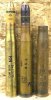
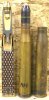
For Tim G, I reviewed my cases and took a couple of photos. All but one of my UK 6 Pdr 7cwt cases are Canadian, most RM/C headstamped. Three have stenciling on the side, and I have attached photos. My 57mm U.S. M 23 CL/C case has no stenciling.
John
John
Attachments
John,
Left case
CAN – I’m assuming this signifies it is Canadian assembled ammunition,why they have done it, I don’t know (this doesn't fit into the normal format)
B2B – The first B indicates that the round is a full charge fitted with an HE shell, the 2 denotes the batch number. The second B is the sub batch letter indicating 1st, 2nd etc., lots of fuzes (or other sub-batch component)
CR/C – This is the monogram of Cherrier a Canadian Filling Factory. Cherrier was a subsidiary of Canadian Industries Ltd and situated in Saint-Paul.
1/45 – month and year when the case was loaded with propellant
NH – Non – Hydroscopic (Hercules and Dupont smokeless powders
The middle case
T5D – T indicating that it is a full charge with a practice projectile (weighted),
5 denotes the batch number of propellant. The D is the sub-batch letter.
CAN – as above
O (in a square) – Indicates the nature of the propellant, in this case NH powder
(this method was discontinued in the UK in Jan 1944)
What is missing, however, is the Monogram of the assembly station and date of assembly.
Right case
E82S (from what I can make out) – E indicating that it is a full charge with a piercing projectile. 82 denotes the propellant batch. The S is the sub-batch letter.
CAN & O as above.
The absence of stencilling on your CL/C case would suggest either the case was never assembled or was indeed sent south for assembly. Why the Canadians were making cases for the Americans doesn’t really make sense as by 1943 the War Effort in America was in full swing. Also, for the Americans with their industrial might, to ‘tool up’ to make these cases would take them no time at all.
RM/C - Robert Mitchell
Regards
Tim. G.
Left case
CAN – I’m assuming this signifies it is Canadian assembled ammunition,why they have done it, I don’t know (this doesn't fit into the normal format)
B2B – The first B indicates that the round is a full charge fitted with an HE shell, the 2 denotes the batch number. The second B is the sub batch letter indicating 1st, 2nd etc., lots of fuzes (or other sub-batch component)
CR/C – This is the monogram of Cherrier a Canadian Filling Factory. Cherrier was a subsidiary of Canadian Industries Ltd and situated in Saint-Paul.
1/45 – month and year when the case was loaded with propellant
NH – Non – Hydroscopic (Hercules and Dupont smokeless powders
The middle case
T5D – T indicating that it is a full charge with a practice projectile (weighted),
5 denotes the batch number of propellant. The D is the sub-batch letter.
CAN – as above
O (in a square) – Indicates the nature of the propellant, in this case NH powder
(this method was discontinued in the UK in Jan 1944)
What is missing, however, is the Monogram of the assembly station and date of assembly.
Right case
E82S (from what I can make out) – E indicating that it is a full charge with a piercing projectile. 82 denotes the propellant batch. The S is the sub-batch letter.
CAN & O as above.
The absence of stencilling on your CL/C case would suggest either the case was never assembled or was indeed sent south for assembly. Why the Canadians were making cases for the Americans doesn’t really make sense as by 1943 the War Effort in America was in full swing. Also, for the Americans with their industrial might, to ‘tool up’ to make these cases would take them no time at all.
RM/C - Robert Mitchell
Regards
Tim. G.
Last edited: