Antoon Hi!
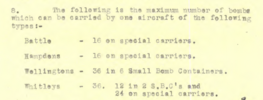
The answer is probably in the size of the different models of the W-bomb (from the experimental small ones to the regular service larger sized ones) and in the bomb accomodations of the Whitley and other planes using this bomb.
There is a definitiev mention of containers in the first operational reports, but the presence of reports with mentions such as "2 bombs remained in the plane" indicate the possibility hta these bombs could also be individualy carried and released.
A SBC could be used for dropping all versions of these bombs (as it could be used to drop the similar sized small 4lb smoke bombs or the larger can-shaped 100lb bomb) instslled on an universal bomb rack - this could fit external points of FAA Albacore or the internal bomb bay / wing bomb cells of the CC Blenheims or the various positions of the Whitley's bomb bay or wing bomb cells.
The individual fitting of these bombs on bomb racks is theoretically possible but would demand the presence of a suspension of some variants and this may be what is alluded to in the last 2 fragments you uploaded - the fact that there were 2 versions of the MKIII one exterally identical in size to the MkII (10 in diameter) and another with ioncreased diameter (18in) may be behind this. BTW both the Whitley and the Blenheim could accomodate small bomb racks in their wing cells, the Whitley also being able to have universal bomb racks installed in its wing cells.
The answer is probably in the size of the different models of the W-bomb (from the experimental small ones to the regular service larger sized ones) and in the bomb accomodations of the Whitley and other planes using this bomb.
There is a definitiev mention of containers in the first operational reports, but the presence of reports with mentions such as "2 bombs remained in the plane" indicate the possibility hta these bombs could also be individualy carried and released.
A SBC could be used for dropping all versions of these bombs (as it could be used to drop the similar sized small 4lb smoke bombs or the larger can-shaped 100lb bomb) instslled on an universal bomb rack - this could fit external points of FAA Albacore or the internal bomb bay / wing bomb cells of the CC Blenheims or the various positions of the Whitley's bomb bay or wing bomb cells.
The individual fitting of these bombs on bomb racks is theoretically possible but would demand the presence of a suspension of some variants and this may be what is alluded to in the last 2 fragments you uploaded - the fact that there were 2 versions of the MKIII one exterally identical in size to the MkII (10 in diameter) and another with ioncreased diameter (18in) may be behind this. BTW both the Whitley and the Blenheim could accomodate small bomb racks in their wing cells, the Whitley also being able to have universal bomb racks installed in its wing cells.