British Ordnance Collectors Network
You are using an out of date browser. It may not display this or other websites correctly.
You should upgrade or use an alternative browser.
You should upgrade or use an alternative browser.
WWI 75mm Ordnance collection
- Thread starter shelldude
- Start date


shelldude
Well-Known Member
Hello John & Dano,
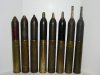
Thanks for the kind words regarding the collection.
John, No I don't have any chemical ordnance from WWI. I guess I've always been a little gun-shy of the chemical stuff.
Dano, You're correct, it's a shrapnel round with an M1907 M 21-second time/percussion fuze.
Best regards,
Randall
Thanks for the kind words regarding the collection.
John, No I don't have any chemical ordnance from WWI. I guess I've always been a little gun-shy of the chemical stuff.
Dano, You're correct, it's a shrapnel round with an M1907 M 21-second time/percussion fuze.
Best regards,
Randall


The U.S. Chemical rounds from WWI did not use gas bottles. The typical calibers were the 75mm for the French 75 and the 4.7 inch gun. U.S. Gas projectiles up to the 1950s use a pipe threaded adapter at the nose of the shell, that contains the bursting charge separate from the chemical. The main body of the projo is filled with chemical and kept sealed by the tapered pipe threaded adapter. The Adapter is very visible as it is hex shaped like a large nut. The design only changed slightly post WWII for the 105mm, 155mm, and 8 inch rounds that were in inventory up through the 90s. Those rounds had the same type of seal, but the large external hex nut shape went away, making the chem rounds harder to identify. To complicate the matter the U.S. Model numbers stamped in the projo body, for white phosphorus and Mustard gas projectiles in 105H and 155H is the same number. It might be acceptable to blow a WP dud round in place, but people really frown on scattering Mustard gas around an area these days.
Since the chemical had contact with the metal body of the projo, there would be a danger of residual chemical inside the body of the projo on the metal surfaces, if it hasn't been "washed" out by cleaning methods.
Since the chemical had contact with the metal body of the projo, there would be a danger of residual chemical inside the body of the projo on the metal surfaces, if it hasn't been "washed" out by cleaning methods.
Last edited:
shelldude
Well-Known Member
Hello Jim,
I enjoy the original patina as well. It seems that each of us has their own opinion regarding restoration of their ordnance collection. The only items I use to remove surface oxidation if necessary is 0000 steel wool and Navel Jelly. BE CAREFUL with "blued" ordnance since navel jelly will instantly remove that as well.
Best regards,
Randall
I enjoy the original patina as well. It seems that each of us has their own opinion regarding restoration of their ordnance collection. The only items I use to remove surface oxidation if necessary is 0000 steel wool and Navel Jelly. BE CAREFUL with "blued" ordnance since navel jelly will instantly remove that as well.
Best regards,
Randall

bramble
Admin Guest
Randell - Can you clarify why you think all the rounds are US ? I think all of your rounds are French WW1 ? I have an extensive photo library of shells from WW1 & WW2 and every one resembles French ordnance. It may be you have 75mm cases - but the heads in my opinion are all from French Shells. I look forward to hearing your explanation of my question. Thank you in advance.
Ammo Cat
Ammo Cat
Ammo Cat,
Before Randall has to go into a long detaied genealogical investigation and thesis as to why his rounds are U.S. manufactured items, you should understand that the U.S. was very unprepared for WWI and WWII. Before the U.S. got into WWI, it was manufacturing huge amounts of artillery ammunition for Russia and other European allies. Since the U.S. had minimal artillery, it patterned much of its field gun material after French designs, such as the French 75 and the 155mm, and some items after Russian designs. Therefore, the U.S. manufactured 75mm HE and shrapnel rounds look identical to the French manufactured ones to include fuzes.
If you search the threads here on BOCN that address early U.S. fuzes, you will see many photos of U.S. manufactured fuzes identical to the ones on Randall's projectiles.
Before Randall has to go into a long detaied genealogical investigation and thesis as to why his rounds are U.S. manufactured items, you should understand that the U.S. was very unprepared for WWI and WWII. Before the U.S. got into WWI, it was manufacturing huge amounts of artillery ammunition for Russia and other European allies. Since the U.S. had minimal artillery, it patterned much of its field gun material after French designs, such as the French 75 and the 155mm, and some items after Russian designs. Therefore, the U.S. manufactured 75mm HE and shrapnel rounds look identical to the French manufactured ones to include fuzes.
If you search the threads here on BOCN that address early U.S. fuzes, you will see many photos of U.S. manufactured fuzes identical to the ones on Randall's projectiles.
Last edited:
shelldude
Well-Known Member
WWI U.S. 75mm projectiles & fuzes...
Hello Bramble,
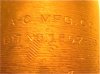
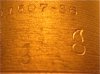
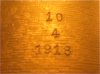
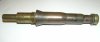
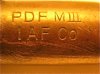
John's (HAZORD) reply to your question couldn't be more precise. My collection of WWI 75mm shells number around fourteen now and EVERY one has the United States Ordnance stamping on it's projectile body. I've included a few photographs of one of my better inscribed 75mm's manufactured by the American Can Manufacturing Company. I've also included a U.S. manufactured MK III PDF fuze which is identical to the French 24/31 I.A.L M-1916 Instante Allonge Lefever, or the instantaneous elongated fuze of the Lefevre design. The American Expeditionary Forces during WWI used almost entirely French Manufactured 75mm guns. But they used both American & French manufactured projectiles and fuzes. Believe me, John isn't the type of person who attempts to be condescending. He's the most knowledgable ordnance collector I've had the pleasure of knowing.
Best regards,
Randall
Hello Bramble,
John's (HAZORD) reply to your question couldn't be more precise. My collection of WWI 75mm shells number around fourteen now and EVERY one has the United States Ordnance stamping on it's projectile body. I've included a few photographs of one of my better inscribed 75mm's manufactured by the American Can Manufacturing Company. I've also included a U.S. manufactured MK III PDF fuze which is identical to the French 24/31 I.A.L M-1916 Instante Allonge Lefever, or the instantaneous elongated fuze of the Lefevre design. The American Expeditionary Forces during WWI used almost entirely French Manufactured 75mm guns. But they used both American & French manufactured projectiles and fuzes. Believe me, John isn't the type of person who attempts to be condescending. He's the most knowledgable ordnance collector I've had the pleasure of knowing.
Best regards,
Randall