British Ordnance Collectors Network
You are using an out of date browser. It may not display this or other websites correctly.
You should upgrade or use an alternative browser.
You should upgrade or use an alternative browser.
17pr construction and markings 1946
- Thread starter lexpev
- Start date


The following goes with the drawings i posted previously here
The 17 Pdr gun was originally designed as an anti-tank weapon and was
provided with a H.E. shell for use against targets which would not normally be engaged with shot. The use of the gun was subsequently extended and it may now be met with on field, S.P. and tank mountings. The ammunition is interchangeable in all 17 Pdr equipment except as stated below.
AMMUNITION
(a) Q.F. fixed ammunition (except Paper Shot, which is Q.F. separate) of the following Service types used
Cartridge, Q.F. 17 Pdr. H.E./T. Shell.
Cartridge, Q.F. 17-Pdr. Reduced Charge H.E./T.
Cartridge, Q.F. 17 Pdr. Reduced Charge H.E./H.C/T.
Cartridge, Q.F. 17 Pdr. Reduced Charge H.E./Super H.C./T
Cartridge, Q.F. 17 Pdr. B.E. Screening Smoke
Cartridge, Q.F. 17 Pdr. B.E. Coloured Smoke
Cartridge, Q.F. 17 Pdr. A.P.C./T. Shot
Cartridge, Q.F. 17 Pdr. A.P.C.B.C./T. Shot
Cartridge, Q.F. 17 Pdr. Practice/T.
Cartridge, Q.F. 17 Pdr. Reduced Charge, Practice, Flathead/T
Cartridge, Q.F. 17 Pdr. S.V. A.P.D.S./T. Shot
Cartridge, Q.F. Blank, 17 Pdr
Cartridge, Q.F. Clearing, 17 Pdr
Cartridge, Q.F. 17 Pdr, Drill, A.P.D.S
Cartridge, Q.F. 17 Pdr. for use with Paper Shot.
Cartridge, Shot, Paper, Q.F. 17 Pdr.
(b) As 17 Pdr and 77mm. projectiles are identical, it was decided, in 1944, to amend the designation of all the then current projectiles to include "17 Pdr. and 77mm." in the nomenclature and all current projectiles are designated in this way.
(c) Since the chamber capacity of the 17 Pdr gun is greater than that of the 77mm and the cartridge cases are consequently of different design complete rounds are not interchangeable between the two equipments.For this reason complete rounds include one equipment only in the nomenclature, i.e., the equipment for which the round, as a whole, is designed.
COMPLETE ROUND DETAILS
(a) Cartridge, Q.F. 17 Pdr. H.E./T. Shell complete round Mk. 3 which is fitted with H.E./T. Shell Mk.1, is not suitable for use in tanks as its length (35.25 inches) precludes stowage in A.F.V. ammunition racks. Packages containing these rounds are stencilled "For use in Anti-tank guns only." The overall length of the normal H.E./T. round is 31.68 inches.
(b) A.P.C.B.C./T. Shot Mk.12 assembled in Cartridge, Q.F. 17 Pdr.,A.P.C.B.C./T. Shot complete round, Mk. 3, is a low windage projectile designed to give increased accuracy over other marks. Its accuracy does not differ significantly, however, from that of the normal Service shot.
PROJECTILES AND METHOD OF FILLING
(a) Projectiles.
H.E. SHELL
(i) H.E. shell are divided into three categories according to their H.E. capacity.(normal, high or super high).
- H.E/T
- H.E/H.C/T
- H.E/Super H.C/T
The external contour of the three types of shell is similar,but the internal contour and length of each vary considerably,
- H.E/T - 9.28 inches maximum
- H.E/H.C/T - 9.94 inches maximum
- H.E/Super H.C/t - 11.82 inches maximum
(ii) Shell H.E/H.C/T and H.E/Super H.C/T have a tendency to be unstable in flight and have been declared obsolete.
B.E. SCREENING AND B.E. COLOURED SMOKE
(iii) The Mk.1 shell (Part No. SX 25 GE), for Q.F 17 Pdr and 77mm B.E screening, green, red, blue and yellow smoke has a tendency to be unstable in flight and is restricted to issue against G 1098 requirements only. Existing stocks of empty Mk.1 shells are being converted by shortening the body by 3.95 inches (measured from base) and by providing a recess in the base of the shortened body to house Base, Shell, Smoke B.E No. 16, Mk. 1. On conversion, the projectile is advanced to Mk. 2. Shell Mk.1 converted to Mk.2 and new production shell Mk. 2 will bear the same part numbers for the empty body (i.e., without sub-assemblies such as base plate and plug) and empty shell (i.e. complete with sub-assemblies)respectively. Part numbers are Body SX 330 Shell SX 45, GE.
Note. The part number of the body is stamped on the side of the body wall;the part number of the shell is stencilled below the driving band and is therefore obscured by the cartridge case.
SHOT
(iv) Shot A.P/T, A.P.C/T and A.P.C.B.C/T for 17 Pdr and 77mm.equipments form one consecutive series of marks. Thus, as each new mark of shot is approved, it is given the mark next in numerical order above the last mark of shot produced, irrespective of the fact that either may be capped or uncapped.
(v) Shot, Practice/T. and Shot, Practice, Flathead/T. must be stored and reported separately. The former is used to give similar ballistics to normal A.P/T. Shot while the latter is for use on short or restricted ranges where reduced penetration and no ricochets are desirable.
(b) METHOD OF FILLING DESIGNS
(i) All H.E. Shell are fitted with external tracer No.13
(ii) Screening and Coloured Smoke Shell Mks.1 and 2 are filled to the same design - D2(L)1631/GF/478, but as the Mk.2 Shell is shorter than the Mk.1 by 3.95 inches, it is filled with two No.18 smoke containers only.
The part numbers of 17 Pdr. and 77mm screening and coloured smoke shell Mk.2 are:
Screening Smoke Shell Mk. 2 SX154GF
Blue Smoke Shell Mk. 2 SX157GF
Green Smoke Shell Mk. 2 SX155GF
Red Smoke Shell Mk. 2 SX156GF
Yellow Smoke Shell Mk. 2 SX158GF
USE OF SLEEVES SABOT WITH Q.F, 17 Pdr, 77mm. A.P.D.S/T Shot, Mks.1 to 3
(a) At trials carried out in 1951, the accuracy of the Q.F 17 Pdr/77mm A.P.D.S/T Mks.1, 2 and 3 shot was considerably improved by the use of a short rubber sleeve fitted over the rear end of the sabot. Approval was therefore given in February, 1952 for the introduction into the Service of sleeves, Sabot, to Spec. 2508 for Q.F. 17 Pdr/77mm A.P.D.S/T. Mks. 1 to 3 shot, when used in the Q.F 17 Pdr gun Mks. 1-3 shot are assembled in Cartridge, Q.F 17 Pdr as follows:
Cartridge, Q.F. 17 Pdr, A.P.D.S/T Mk.1 - Shot Mk. 1
Cartridge, Q.F. 17 Pdr, A.P.D.S/T Mk.2 - Shot Mk. 2 or 3.
(b) Sleeves, sabot, which are packed separately from the ammunition,will be issued on a for one basis with issues of Cartridge,Q.F, 17 Pdr, Mks.1 and 2.
Note. - The accuracy of Cartridge, Q.F, 77mm A.P.D.S/T shot is not improved by the fitting of sleeves, sabot.
(c) Cartridge, Q.F 17 Pdr A.P.D.S/T shot of Canadian manufacture does not require the use of sleeves, sabot. Rounds of Canadian manufacture have the letters 'CDN' included in the nomenclature and normally bear the letters 'CAN' after the batch number.British and Canadian rounds will be reported separately on the stock report.
CASE EMPTY, PROPELLANTS AND THE ARRANGEMENT OF CHARGES
(a) Case empty
(i) The only difference between the Mk.1 and Mk.2 case is that the mouth of the latter has been increased in diameter to overcome large interference fits, and the metal stresses resulting there from.
(ii) Except for Cartridge, Q.F 17 Pdr S.V. A.P.D.S./T. Shot all cases are secured by four equi-spaced indents into a cannelure formed in the body of the projectile below the driving band. For S.V. A.P.D.S./T. shot, the mouth of the
case is coned over the 'skirt' of the projectile.
(b) Propellants, and the Arrangement of Charges
(i) Although the word "FOIL" has been dropped from the nomenclature, all rounds except A.P.D.S./T. and smoke,contain foil. Originally, full charge rounds contained 6 drams only of lead or tin foil but, in order to prevent "coppering," approval was given for the amount to be increased to 12 drams in the following natures only,commencing with the batches and box numbers specified below
Cartridge, Q.F 17 Pdr
Shot, Practice, Flathead/T - Batch X1A - Box 550.
Shot, A.P.C./T - Batch E 1OA - Box 276.
Shot, Practice/T - Batch T. 38A - Box 116.
Cartridge, Q.F Blank, Clearing and Paper Shot
(a) Fuze
(i) H.E rounds of early production fitted with Fuze D.A No. 244 Mk.1, 2, 3, or 4 or Fuze, D.A No.257 Mk.1, all of which are fitted with copper needle discs and may give rise to prematures, are banned for training purposes and are being refuzed with Fuze,No. 257 Mk. 2.
(ii) H.E. rounds from current production are fitted with either Fuze No. 257 Mk.2 (steel needle disc) or Fuze, No.410 both of which are interchangeable and are suitable for training and operational use.
(iii) Cartridge, Q.F. 17 Pdr Reduced Charge, H.E/H.C/T Shell, Mk.1 is fitted with U.S.A. Fuze M48A1. British fuzes are not inter-changeable with the M48A1 because the absence of an adapter in the projectile of this round precludes their use
(iv) Fuze, Time, No.390 is approved for use in 17 Pdr screening and colour smoke shell.
(b) Primer.-Primer, Percussion, Q.F., Cartridge, Nos. 9 and 11 must not be interchanged.
(c) Tracers.-
All H.E. shells are fitted with external tracers No.13. A.P.D.S./T.
Shot Mk.1 is fitted with external tracer No.22 and A.P.D.S./T.
Shot Mks. 2 and 3, with external tracer No. 29. All other projectiles,
excluding Screening and Coloured Smoke shells have stemmed tracer cavities.
(d) Plug Fuze Hole
Complete rounds are not normally held plugged but when it is necessary to do so, the plug shown against each projectile in the illustrations will be used.
e) Clip, Q.F. Cartridge No. 37 Mk.1 or 2 may be used.
The 17 Pdr gun was originally designed as an anti-tank weapon and was
provided with a H.E. shell for use against targets which would not normally be engaged with shot. The use of the gun was subsequently extended and it may now be met with on field, S.P. and tank mountings. The ammunition is interchangeable in all 17 Pdr equipment except as stated below.
AMMUNITION
(a) Q.F. fixed ammunition (except Paper Shot, which is Q.F. separate) of the following Service types used
Cartridge, Q.F. 17 Pdr. H.E./T. Shell.
Cartridge, Q.F. 17-Pdr. Reduced Charge H.E./T.
Cartridge, Q.F. 17 Pdr. Reduced Charge H.E./H.C/T.
Cartridge, Q.F. 17 Pdr. Reduced Charge H.E./Super H.C./T
Cartridge, Q.F. 17 Pdr. B.E. Screening Smoke
Cartridge, Q.F. 17 Pdr. B.E. Coloured Smoke
Cartridge, Q.F. 17 Pdr. A.P.C./T. Shot
Cartridge, Q.F. 17 Pdr. A.P.C.B.C./T. Shot
Cartridge, Q.F. 17 Pdr. Practice/T.
Cartridge, Q.F. 17 Pdr. Reduced Charge, Practice, Flathead/T
Cartridge, Q.F. 17 Pdr. S.V. A.P.D.S./T. Shot
Cartridge, Q.F. Blank, 17 Pdr
Cartridge, Q.F. Clearing, 17 Pdr
Cartridge, Q.F. 17 Pdr, Drill, A.P.D.S
Cartridge, Q.F. 17 Pdr. for use with Paper Shot.
Cartridge, Shot, Paper, Q.F. 17 Pdr.
(b) As 17 Pdr and 77mm. projectiles are identical, it was decided, in 1944, to amend the designation of all the then current projectiles to include "17 Pdr. and 77mm." in the nomenclature and all current projectiles are designated in this way.
(c) Since the chamber capacity of the 17 Pdr gun is greater than that of the 77mm and the cartridge cases are consequently of different design complete rounds are not interchangeable between the two equipments.For this reason complete rounds include one equipment only in the nomenclature, i.e., the equipment for which the round, as a whole, is designed.
COMPLETE ROUND DETAILS
(a) Cartridge, Q.F. 17 Pdr. H.E./T. Shell complete round Mk. 3 which is fitted with H.E./T. Shell Mk.1, is not suitable for use in tanks as its length (35.25 inches) precludes stowage in A.F.V. ammunition racks. Packages containing these rounds are stencilled "For use in Anti-tank guns only." The overall length of the normal H.E./T. round is 31.68 inches.
(b) A.P.C.B.C./T. Shot Mk.12 assembled in Cartridge, Q.F. 17 Pdr.,A.P.C.B.C./T. Shot complete round, Mk. 3, is a low windage projectile designed to give increased accuracy over other marks. Its accuracy does not differ significantly, however, from that of the normal Service shot.
PROJECTILES AND METHOD OF FILLING
(a) Projectiles.
H.E. SHELL
(i) H.E. shell are divided into three categories according to their H.E. capacity.(normal, high or super high).
- H.E/T
- H.E/H.C/T
- H.E/Super H.C/T
The external contour of the three types of shell is similar,but the internal contour and length of each vary considerably,
- H.E/T - 9.28 inches maximum
- H.E/H.C/T - 9.94 inches maximum
- H.E/Super H.C/t - 11.82 inches maximum
(ii) Shell H.E/H.C/T and H.E/Super H.C/T have a tendency to be unstable in flight and have been declared obsolete.
B.E. SCREENING AND B.E. COLOURED SMOKE
(iii) The Mk.1 shell (Part No. SX 25 GE), for Q.F 17 Pdr and 77mm B.E screening, green, red, blue and yellow smoke has a tendency to be unstable in flight and is restricted to issue against G 1098 requirements only. Existing stocks of empty Mk.1 shells are being converted by shortening the body by 3.95 inches (measured from base) and by providing a recess in the base of the shortened body to house Base, Shell, Smoke B.E No. 16, Mk. 1. On conversion, the projectile is advanced to Mk. 2. Shell Mk.1 converted to Mk.2 and new production shell Mk. 2 will bear the same part numbers for the empty body (i.e., without sub-assemblies such as base plate and plug) and empty shell (i.e. complete with sub-assemblies)respectively. Part numbers are Body SX 330 Shell SX 45, GE.
Note. The part number of the body is stamped on the side of the body wall;the part number of the shell is stencilled below the driving band and is therefore obscured by the cartridge case.
SHOT
(iv) Shot A.P/T, A.P.C/T and A.P.C.B.C/T for 17 Pdr and 77mm.equipments form one consecutive series of marks. Thus, as each new mark of shot is approved, it is given the mark next in numerical order above the last mark of shot produced, irrespective of the fact that either may be capped or uncapped.
(v) Shot, Practice/T. and Shot, Practice, Flathead/T. must be stored and reported separately. The former is used to give similar ballistics to normal A.P/T. Shot while the latter is for use on short or restricted ranges where reduced penetration and no ricochets are desirable.
(b) METHOD OF FILLING DESIGNS
(i) All H.E. Shell are fitted with external tracer No.13
(ii) Screening and Coloured Smoke Shell Mks.1 and 2 are filled to the same design - D2(L)1631/GF/478, but as the Mk.2 Shell is shorter than the Mk.1 by 3.95 inches, it is filled with two No.18 smoke containers only.
The part numbers of 17 Pdr. and 77mm screening and coloured smoke shell Mk.2 are:
Screening Smoke Shell Mk. 2 SX154GF
Blue Smoke Shell Mk. 2 SX157GF
Green Smoke Shell Mk. 2 SX155GF
Red Smoke Shell Mk. 2 SX156GF
Yellow Smoke Shell Mk. 2 SX158GF
USE OF SLEEVES SABOT WITH Q.F, 17 Pdr, 77mm. A.P.D.S/T Shot, Mks.1 to 3
(a) At trials carried out in 1951, the accuracy of the Q.F 17 Pdr/77mm A.P.D.S/T Mks.1, 2 and 3 shot was considerably improved by the use of a short rubber sleeve fitted over the rear end of the sabot. Approval was therefore given in February, 1952 for the introduction into the Service of sleeves, Sabot, to Spec. 2508 for Q.F. 17 Pdr/77mm A.P.D.S/T. Mks. 1 to 3 shot, when used in the Q.F 17 Pdr gun Mks. 1-3 shot are assembled in Cartridge, Q.F 17 Pdr as follows:
Cartridge, Q.F. 17 Pdr, A.P.D.S/T Mk.1 - Shot Mk. 1
Cartridge, Q.F. 17 Pdr, A.P.D.S/T Mk.2 - Shot Mk. 2 or 3.
(b) Sleeves, sabot, which are packed separately from the ammunition,will be issued on a for one basis with issues of Cartridge,Q.F, 17 Pdr, Mks.1 and 2.
Note. - The accuracy of Cartridge, Q.F, 77mm A.P.D.S/T shot is not improved by the fitting of sleeves, sabot.
(c) Cartridge, Q.F 17 Pdr A.P.D.S/T shot of Canadian manufacture does not require the use of sleeves, sabot. Rounds of Canadian manufacture have the letters 'CDN' included in the nomenclature and normally bear the letters 'CAN' after the batch number.British and Canadian rounds will be reported separately on the stock report.
CASE EMPTY, PROPELLANTS AND THE ARRANGEMENT OF CHARGES
(a) Case empty
(i) The only difference between the Mk.1 and Mk.2 case is that the mouth of the latter has been increased in diameter to overcome large interference fits, and the metal stresses resulting there from.
(ii) Except for Cartridge, Q.F 17 Pdr S.V. A.P.D.S./T. Shot all cases are secured by four equi-spaced indents into a cannelure formed in the body of the projectile below the driving band. For S.V. A.P.D.S./T. shot, the mouth of the
case is coned over the 'skirt' of the projectile.
(b) Propellants, and the Arrangement of Charges
(i) Although the word "FOIL" has been dropped from the nomenclature, all rounds except A.P.D.S./T. and smoke,contain foil. Originally, full charge rounds contained 6 drams only of lead or tin foil but, in order to prevent "coppering," approval was given for the amount to be increased to 12 drams in the following natures only,commencing with the batches and box numbers specified below
Cartridge, Q.F 17 Pdr
Shot, Practice, Flathead/T - Batch X1A - Box 550.
Shot, A.P.C./T - Batch E 1OA - Box 276.
Shot, Practice/T - Batch T. 38A - Box 116.
Cartridge, Q.F Blank, Clearing and Paper Shot
(a) Fuze
(i) H.E rounds of early production fitted with Fuze D.A No. 244 Mk.1, 2, 3, or 4 or Fuze, D.A No.257 Mk.1, all of which are fitted with copper needle discs and may give rise to prematures, are banned for training purposes and are being refuzed with Fuze,No. 257 Mk. 2.
(ii) H.E. rounds from current production are fitted with either Fuze No. 257 Mk.2 (steel needle disc) or Fuze, No.410 both of which are interchangeable and are suitable for training and operational use.
(iii) Cartridge, Q.F. 17 Pdr Reduced Charge, H.E/H.C/T Shell, Mk.1 is fitted with U.S.A. Fuze M48A1. British fuzes are not inter-changeable with the M48A1 because the absence of an adapter in the projectile of this round precludes their use
(iv) Fuze, Time, No.390 is approved for use in 17 Pdr screening and colour smoke shell.
(b) Primer.-Primer, Percussion, Q.F., Cartridge, Nos. 9 and 11 must not be interchanged.
(c) Tracers.-
All H.E. shells are fitted with external tracers No.13. A.P.D.S./T.
Shot Mk.1 is fitted with external tracer No.22 and A.P.D.S./T.
Shot Mks. 2 and 3, with external tracer No. 29. All other projectiles,
excluding Screening and Coloured Smoke shells have stemmed tracer cavities.
(d) Plug Fuze Hole
Complete rounds are not normally held plugged but when it is necessary to do so, the plug shown against each projectile in the illustrations will be used.
e) Clip, Q.F. Cartridge No. 37 Mk.1 or 2 may be used.
Chris 42 RQ
Well-Known Member
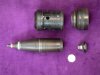
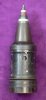
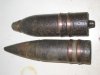
17 Pounder APPS or latterly known as APDS
See the attached pictures of this round initially known as an APPS/T = Armour Piercing Potted Sabot / Tracer and on entering British service then became an APDS/T.

See the attached pictures of this round initially known as an APPS/T = Armour Piercing Potted Sabot / Tracer and on entering British service then became an APDS/T.
Attachments
Hetzenauer
Member
Hi all, is the 17 pdr HE and Anti tank bullet expensive??

Prices for 17 pounders
Hi here's a few prices I've seen over the last year for the 17pr rounds, they very a lot depending on condition, date and who is selling it.
APCBC - between 75 and 150
APDS - between 250 and 300
APC - between 100 and 200
Flat head proof - 75
Short HE - 200 plus
Long HE - one went for over 500 a few years ago
Smoke - never seen one for sale
Littlejohn - they only ever made a few so they would cost an absolute fortune, I've only seen a design drawing of one!!!!!!!!!!
The short cases cost more, there is one on the link below for sale.
http://www.jcmilitaria.com/details.asp?ID=873
Hope this helps.
Dave.
Hi here's a few prices I've seen over the last year for the 17pr rounds, they very a lot depending on condition, date and who is selling it.
APCBC - between 75 and 150
APDS - between 250 and 300
APC - between 100 and 200
Flat head proof - 75
Short HE - 200 plus
Long HE - one went for over 500 a few years ago
Smoke - never seen one for sale
Littlejohn - they only ever made a few so they would cost an absolute fortune, I've only seen a design drawing of one!!!!!!!!!!
The short cases cost more, there is one on the link below for sale.
http://www.jcmilitaria.com/details.asp?ID=873
Hope this helps.
Dave.
Hetzenauer
Member

Seroster
Member
Hi all,
This is my first post here (I will make an introductory post straightaway). Sorry to add to a very old thread, but I was wondering if anyone knows the identity of the document that MadBomber31 was posting photographs from?
I have been trying to work out just exactly how many different rounds were available for the 17 pounder and it hurts my head. (e.g. was a timed fuze round available for both full and reduced capacity HE?)
This is my first post here (I will make an introductory post straightaway). Sorry to add to a very old thread, but I was wondering if anyone knows the identity of the document that MadBomber31 was posting photographs from?
I have been trying to work out just exactly how many different rounds were available for the 17 pounder and it hurts my head. (e.g. was a timed fuze round available for both full and reduced capacity HE?)

Quatermass
Well-Known Member
Pictures come from:-
'MAINTENANCE MANUAL FOR THE ORDNANCE, 17-PR., MARK 1 ON CARRIAGE, 17-PR., MARKS 1 AND 1W AND ORDNANCE, Q.F. 17-PR., MARK 5 ON 3-INCH GUN MOTOR CARRIAGE, M10 1946
'MAINTENANCE MANUAL FOR THE ORDNANCE, 17-PR., MARK 1 ON CARRIAGE, 17-PR., MARKS 1 AND 1W AND ORDNANCE, Q.F. 17-PR., MARK 5 ON 3-INCH GUN MOTOR CARRIAGE, M10 1946
Are the No. 8 tracer plugs in the base of the HE projectiles made of brass or steel? How are they secured to the projectile - threads or press fit? I plan on making a reproduction projectile out of steel, copper and brass. I would also appreciate it if someone had the height and other important dimensions for the shortest HE projectile. Thank you for your help.
Last edited:
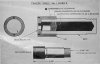
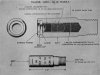
The Plug, Base, Shell No.8 is steel, screw threaded and is made to be removed to take the Tracer Shell No.13 for the all the HE projectiles.
The HE/T is 9.28", HE/HC/T is 9.94" and HE/Super HC/T is 11.82".
The only reason for the shell lengths being given in a service publication is because of the commonality of shells with the 77mm tank gun and the fact that certain marks of cased shell were too long to fit into the tank stowage racks and in some cases the bustle was not long enough to permit loading.
The HE/T is 9.28", HE/HC/T is 9.94" and HE/Super HC/T is 11.82".
The only reason for the shell lengths being given in a service publication is because of the commonality of shells with the 77mm tank gun and the fact that certain marks of cased shell were too long to fit into the tank stowage racks and in some cases the bustle was not long enough to permit loading.
Last edited:
I take your point. I do not know what drawings you have. I would have expected to see threads in the service drawing that I have if it was screw threaded to take Tracer No.13.
This tracer was also used in 6Pr HE/T but these are long gone.
Unfortunately, while Tracers No.11,12 and 14 went on into 20Pr the No. 13 died, having been made obsolete by W.O.L.C Paragraphed C 9945.
Having researched all this, I found a line drawing showing the plug removed and the Tracer No.13 screwed and grubscrewed into its place.
It is now way past my teatime, but I will send a photo tomorrow.
This tracer was also used in 6Pr HE/T but these are long gone.
Unfortunately, while Tracers No.11,12 and 14 went on into 20Pr the No. 13 died, having been made obsolete by W.O.L.C Paragraphed C 9945.
Having researched all this, I found a line drawing showing the plug removed and the Tracer No.13 screwed and grubscrewed into its place.
It is now way past my teatime, but I will send a photo tomorrow.
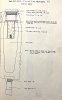
Attached is a dimensioned drawing for a tracer holder for the 3" 12/13 pr family of shells. I wouldn't be surprised if they 'cut & pasted' the dimensions into the 17 pr/77mm drawings. The 3" etc., used a No.1 Tracer, Shell. The No. 13 Tracer, Shell is described as being 'similar' to the No. 1. Towards war's end authority was given for Tracers No.s 10 - 15 inc. to be manufactured from VIB steel.
TimG
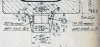
P.S. - I've just found Plates for the No. 1 & No. 13 Tracer, Shell. The thread is the same and the No. 13 was made of steel. Camera battery is flat, will post tomorrow.
TimG
P.S. - I've just found Plates for the No. 1 & No. 13 Tracer, Shell. The thread is the same and the No. 13 was made of steel. Camera battery is flat, will post tomorrow.
Last edited: