
British Ordnance Collectors Network
You are using an out of date browser. It may not display this or other websites correctly.
You should upgrade or use an alternative browser.
You should upgrade or use an alternative browser.
British Mk I 100lb Anti-submarine bomb c1940
- Thread starter WATU
- Start date
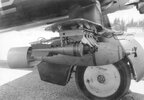
This photograph shows a 100 lb. Anti Submarine Bomb Mk I-III with nose fuze No. 32 under the winglet of a Lysander, together with a 20lb "Cooper" bomb. Both bombs were already obsolete by the beginning of WW2. A number of photograph exist showing the similar 250lb AS bomb, a larger size version of the 100lb AS. Both teh 100lbs and teh 250lbs AS were operational failure and this led the British into a crash development of efficient depth charges
A surviving sample of the 100lbs AntiSubmarine bomb (though with uncorrect coloring - this bomb was always painted yellow-ochre as it was withdrawn before the introduction of the bronze green scheme) is on display at the Merseyside Maritime Museum in Liverpool
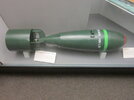
A surviving sample of the 100lbs AntiSubmarine bomb (though with uncorrect coloring - this bomb was always painted yellow-ochre as it was withdrawn before the introduction of the bronze green scheme) is on display at the Merseyside Maritime Museum in Liverpool
In the early phases of ww2, RCAF Squadrons 118 and 122 operated the Lysanders in the anti-submarine role till their replacement by Hudsons and Bolingbrokes.
Lysanders from the Canadian 111 (Army Co-operation) Squadron, RCAF Station Patricia Bay, British Columbia, were also used in anti-submaine role in 1940
The No. 5 Coastal Artillery Co-operation (CAC) Detachment (later a Flight) of the Royal Canadian Air Force (RCAF) stationed at RCAF Station Torbay, near St. John's, Newfoundland and the No. 2 Coast Artillery Cooperation (CAC) Detachment at RCAF Station Dartmouth, Nova Scotia, still used Lysanders for anti submarine patrols in 1942, equipped with AS bombs.
In fact the Lysander Mk. II serial 449 of No. 2 Coast Artillery Cooperation (CAC) Detachment made the first, and possibly the only, confirmed submarine attack by a Canadian-based Lysander, when, on the evening of 23 February 1942, it attacked and damaged U-96 , 20 minutes flying time south of Halifax harbour.
The use of sticks of AS bombs was generally dropped by Sunderland but these were usually 250lb AS - 4 under each retractable underwing rack, prior to teh introduction of the depth charges.
The inectiveness of the AS bombs was not so much due to their inaccuracy than to their fusing system
The fusing systems for those bombs provided for either an instantaneous detonation in the event of a dry hit on a submarine, or for detonation after some
timedelay if the bomb entered the water. For a variety of reasons, the shortest time-delay which could be provided was 1/2 second. A high proportion of U-boats attacked from the air were on the surface, and the most accurate attack was that at low level. Such an attack was not possible with the existing antisubmarine bombs, because, in the event of a dry hit, the resulting instantaneous detonation would cause damage to the aircraft dropping the bomb (At least one Anson and two Fleet Air Arm Skuas were destroyed by their own bombs in September 1939 alone), while, if the bomb entered the water, the 1/2 second delay caused it to detonate at too great a depth to inflict lethal damage on a surfaced submarine.
The whole issue of fusing of these bombs was a a headache - in trial done in 1934, the nose fuse was shown to effect the underwater trajectory of the bomb in an unpredictable fashion (The nose fuze was supressed on the MkIV, the standard 100lb AS bomb of the UK Coastal Command in 1940). Further trials evidenced a 40% failure rate of the No. 30 tail pistol, largely due to difficulty in guaranteeing detonation at a depth of 20-25 feet, that considered optimal for attacking a surfaced submarine.
The two Skuas were from 803 Squadron Fleet Air Arm, operating from Ark Royal. The boat they attacked was the U-30 of none other than Fritz-Julius Lemp which had just sunk the first ship of the war, the Athenia. Some reports say that they were shot down, but in fact their bombs skipped off the water, exploding under their aircraft, damaging both so that they were forced to ditch alongside their intended victim, which was undamaged.
he Anson was from 233 Squadron based at Leuchars. On the second day of the war this Anson attacked an 'enemy' submarine off the Scottish coast, in fcat the British submarine "HMS Seahorse", only to be damaged by splinters from its own bombs. It nearly made it home, but was forced to ditch in St Andrews Bay.
Versions:
In 1926 five 100 lb AS bombs had been dropped and four of them were rated as 'satisfactory' because they did not break up and did detonate below the surface. A sixth was detonated statically underwater and the fragmentation declared satisfactory. It was declared fit for service, in its MK I version, by 1928.
The Mk II, with a lighter nose and tail (and therefore better CWR) was tested in 1930 and deemed satisfactory, based on the 1926 criteria.
The Mk III followed with a strengthened suspension lug, allowing the aircraft carrying the bomb to be catapulted from an aircraft carrier without fear of leaving the bomb behind.
The MkIV had only a tail pistol and its filling was either 45 lb of RDX/TNT at 60/40 or 44 lb TNT dependng of availability,
Note that the 100lb AS bomb wasn't placed in production and issued until 1939 . Some accounts claim that the MK I and MK II were never put in production. It seems that the first production order placed in 1938 was for 50 bombs of each Mk with fIrst deliveries in 1939.
A decision was taken in 1939 to use only the Mk IV versions operationally and to keep the earlier suspect Marks as a war reserve against urgent contingency plans, pending a build up in numbers of the Mk IVs.
These bombs were not completely ineffective, but the failures did far outweigh the successes.
In 1939 Coastal Command aircraft spotted 57 U boats, attacked 40, but damaged only 8. Nonetheless, in the early days;
Two 100lb AS bombs, dropped from a Swordfish, sank U-64 in Herjangs Fjord (near Narvik) on 13th April 1940
U-55 and U-26 were both sunk or 'encouraged to scuttle' with the help of 250lb and 100lb AS bombs dropped by Sunderlands of Nos 228 and 10 Squadrons respectively, in January and July 1940.
U-46 was seriously damaged by four 100lb bombs whilst in Norwegian waters in November 1940.
Lysanders from the Canadian 111 (Army Co-operation) Squadron, RCAF Station Patricia Bay, British Columbia, were also used in anti-submaine role in 1940
The No. 5 Coastal Artillery Co-operation (CAC) Detachment (later a Flight) of the Royal Canadian Air Force (RCAF) stationed at RCAF Station Torbay, near St. John's, Newfoundland and the No. 2 Coast Artillery Cooperation (CAC) Detachment at RCAF Station Dartmouth, Nova Scotia, still used Lysanders for anti submarine patrols in 1942, equipped with AS bombs.
In fact the Lysander Mk. II serial 449 of No. 2 Coast Artillery Cooperation (CAC) Detachment made the first, and possibly the only, confirmed submarine attack by a Canadian-based Lysander, when, on the evening of 23 February 1942, it attacked and damaged U-96 , 20 minutes flying time south of Halifax harbour.
The use of sticks of AS bombs was generally dropped by Sunderland but these were usually 250lb AS - 4 under each retractable underwing rack, prior to teh introduction of the depth charges.
The inectiveness of the AS bombs was not so much due to their inaccuracy than to their fusing system
The fusing systems for those bombs provided for either an instantaneous detonation in the event of a dry hit on a submarine, or for detonation after some
timedelay if the bomb entered the water. For a variety of reasons, the shortest time-delay which could be provided was 1/2 second. A high proportion of U-boats attacked from the air were on the surface, and the most accurate attack was that at low level. Such an attack was not possible with the existing antisubmarine bombs, because, in the event of a dry hit, the resulting instantaneous detonation would cause damage to the aircraft dropping the bomb (At least one Anson and two Fleet Air Arm Skuas were destroyed by their own bombs in September 1939 alone), while, if the bomb entered the water, the 1/2 second delay caused it to detonate at too great a depth to inflict lethal damage on a surfaced submarine.
The whole issue of fusing of these bombs was a a headache - in trial done in 1934, the nose fuse was shown to effect the underwater trajectory of the bomb in an unpredictable fashion (The nose fuze was supressed on the MkIV, the standard 100lb AS bomb of the UK Coastal Command in 1940). Further trials evidenced a 40% failure rate of the No. 30 tail pistol, largely due to difficulty in guaranteeing detonation at a depth of 20-25 feet, that considered optimal for attacking a surfaced submarine.
The two Skuas were from 803 Squadron Fleet Air Arm, operating from Ark Royal. The boat they attacked was the U-30 of none other than Fritz-Julius Lemp which had just sunk the first ship of the war, the Athenia. Some reports say that they were shot down, but in fact their bombs skipped off the water, exploding under their aircraft, damaging both so that they were forced to ditch alongside their intended victim, which was undamaged.
he Anson was from 233 Squadron based at Leuchars. On the second day of the war this Anson attacked an 'enemy' submarine off the Scottish coast, in fcat the British submarine "HMS Seahorse", only to be damaged by splinters from its own bombs. It nearly made it home, but was forced to ditch in St Andrews Bay.
Versions:
In 1926 five 100 lb AS bombs had been dropped and four of them were rated as 'satisfactory' because they did not break up and did detonate below the surface. A sixth was detonated statically underwater and the fragmentation declared satisfactory. It was declared fit for service, in its MK I version, by 1928.
The Mk II, with a lighter nose and tail (and therefore better CWR) was tested in 1930 and deemed satisfactory, based on the 1926 criteria.
The Mk III followed with a strengthened suspension lug, allowing the aircraft carrying the bomb to be catapulted from an aircraft carrier without fear of leaving the bomb behind.
The MkIV had only a tail pistol and its filling was either 45 lb of RDX/TNT at 60/40 or 44 lb TNT dependng of availability,
Note that the 100lb AS bomb wasn't placed in production and issued until 1939 . Some accounts claim that the MK I and MK II were never put in production. It seems that the first production order placed in 1938 was for 50 bombs of each Mk with fIrst deliveries in 1939.
A decision was taken in 1939 to use only the Mk IV versions operationally and to keep the earlier suspect Marks as a war reserve against urgent contingency plans, pending a build up in numbers of the Mk IVs.
These bombs were not completely ineffective, but the failures did far outweigh the successes.
In 1939 Coastal Command aircraft spotted 57 U boats, attacked 40, but damaged only 8. Nonetheless, in the early days;
Two 100lb AS bombs, dropped from a Swordfish, sank U-64 in Herjangs Fjord (near Narvik) on 13th April 1940
U-55 and U-26 were both sunk or 'encouraged to scuttle' with the help of 250lb and 100lb AS bombs dropped by Sunderlands of Nos 228 and 10 Squadrons respectively, in January and July 1940.
U-46 was seriously damaged by four 100lb bombs whilst in Norwegian waters in November 1940.
Last edited:
Very interesting. Have sent you a PM. Thanks.In the early phases of ww2, RCAF Squadrons 118 and 122 operated the Lysanders in the anti-submarine role till their replacement by Hudsons and Bolingbrokes.
Lysanders from the Canadian 111 (Army Co-operation) Squadron, RCAF Station Patricia Bay, British Columbia, were also used in anti-submaine role in 1940
The No. 5 Coastal Artillery Co-operation (CAC) Detachment (later a Flight) of the Royal Canadian Air Force (RCAF) stationed at RCAF Station Torbay, near St. John's, Newfoundland and the No. 2 Coast Artillery Cooperation (CAC) Detachment at RCAF Station Dartmouth, Nova Scotia, still used Lysanders for anti submarine patrols in 1942, equipped with AS bombs.
In fact the Lysander Mk. II serial 449 of No. 2 Coast Artillery Cooperation (CAC) Detachment made the first, and possibly the only, confirmed submarine attack by a Canadian-based Lysander, when, on the evening of 23 February 1942, it attacked and damaged U-96 , 20 minutes flying time south of Halifax harbour.
The use of sticks of AS bombs was generally dropped by Sunderland but these were usually 250lb AS - 4 under each retractable underwing rack, prior to teh introduction of the depth charges.
The inectiveness of the AS bombs was not so much due to their inaccuracy than to their fusing system
The fusing systems for those bombs provided for either an instantaneous detonation in the event of a dry hit on a submarine, or for detonation after some
timedelay if the bomb entered the water. For a variety of reasons, the shortest time-delay which could be provided was 1/2 second. A high proportion of U-boats attacked from the air were on the surface, and the most accurate attack was that at low level. Such an attack was not possible with the existing antisubmarine bombs, because, in the event of a dry hit, the resulting instantaneous detonation would cause damage to the aircraft dropping the bomb (At least one Anson and two Fleet Air Arm Skuas were destroyed by their own bombs in September 1939 alone), while, if the bomb entered the water, the 1/2 second delay caused it to detonate at too great a depth to inflict lethal damage on a surfaced submarine.
The whole issue of fusing of these bombs was a a headache - in trial done in 1934, the nose fuse was shown to effect the underwater trajectory of the bomb in an unpredictable fashion (The nose fuze was supressed on the MkIV, the standard 100lb AS bomb of the UK Coastal Command in 1940). Further trials evidenced a 40% failure rate of the No. 30 tail pistol, largely due to difficulty in guaranteeing detonation at a depth of 20-25 feet, that considered optimal for attacking a surfaced submarine.
The two Skuas were from 803 Squadron Fleet Air Arm, operating from Ark Royal. The boat they attacked was the U-30 of none other than Fritz-Julius Lemp which had just sunk the first ship of the war, the Athenia. Some reports say that they were shot down, but in fact their bombs skipped off the water, exploding under their aircraft, damaging both so that they were forced to ditch alongside their intended victim, which was undamaged.
he Anson was from 233 Squadron based at Leuchars. On the second day of the war this Anson attacked an 'enemy' submarine off the Scottish coast, in fcat the British submarine "HMS Seahorse", only to be damaged by splinters from its own bombs. It nearly made it home, but was forced to ditch in St Andrews Bay.
Versions:
In 1926 five 100 lb AS bombs had been dropped and four of them were rated as 'satisfactory' because they did not break up and did detonate below the surface. A sixth was detonated statically underwater and the fragmentation declared satisfactory. It was declared fit for service, in its MK I version, by 1928.
The Mk II, with a lighter nose and tail (and therefore better CWR) was tested in 1930 and deemed satisfactory, based on the 1926 criteria.
The Mk III followed with a strengthened suspension lug, allowing the aircraft carrying the bomb to be catapulted from an aircraft carrier without fear of leaving the bomb behind.
The MkIV had only a tail pistol and its filling was either 45 lb of RDX/TNT at 60/40 or 44 lb TNT dependng of availability,
Note that the 100lb AS bomb wasn't placed in production and issued until 1939 . Some accounts claim that the MK I and MK II were never put in production. It seems that the first production order placed in 1938 was for 50 bombs of each Mk with fIrst deliveries in 1939.
A decision was taken in 1939 to use only the Mk IV versions operationally and to keep the earlier suspect Marks as a war reserve against urgent contingency plans, pending a build up in numbers of the Mk IVs.
These bombs were not completely ineffective, but the failures did far outweigh the successes.
In 1939 Coastal Command aircraft spotted 57 U boats, attacked 40, but damaged only 8. Nonetheless, in the early days;
Two 100lb AS bombs, dropped from a Swordfish, sank U-64 in Herjangs Fjord (near Narvik) on 13th April 1940
U-55 and U-26 were both sunk or 'encouraged to scuttle' with the help of 250lb and 100lb AS bombs dropped by Sunderlands of Nos 228 and 10 Squadrons respectively, in January and July 1940.
U-46 was seriously damaged by four 100lb bombs whilst in Norwegian waters in November 1940.
View attachment 210239
AP1661B Vol. 1, Sect. 5, Chapter 3 says in § Identification colouring and marking
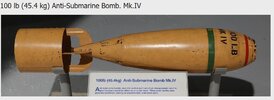
"The bomb body, with the exception of the tail adapter, is painted dark green. A red band, 1/2 in. wide, is painted round the bomb body, 1 in. from the nose end, and a light green band, 1 in. wide, 4 in. from the nose end. The tail and the transit base are also painted dark green."
"The bomb body, with the exception of the tail adapter, is painted dark green. A red band, 1/2 in. wide, is painted round the bomb body, 1 in. from the nose end, and a light green band, 1 in. wide, 4 in. from the nose end. The tail and the transit base are also painted dark green."
The regulation decribed in AP1661B was indeed passed in 1940 but introduced only very progressively with the newly maniufactured bombs. In fact, only from 1942 onwards with the MC bombs, were all British bombs manufactured with the dark green scheme.
Bombs already produced by 1940 were not repinted and remained in buff colour. This si true for the eary marks of the GP bombs, AS bombs etc..
As the production of 100lbs bombs seems to have been limited to the 1939-40 period, these bombs remained overall buff couloured.
Bombs already produced by 1940 were not repinted and remained in buff colour. This si true for the eary marks of the GP bombs, AS bombs etc..
As the production of 100lbs bombs seems to have been limited to the 1939-40 period, these bombs remained overall buff couloured.
Early manufacture 100 lb, 250 lb, & 500 lb AS Bombs were over-all yellow with appropriate stripes and markings, while later manufacture 100 lb Mk IV, 250 lb Mk IV, & 500 lb Mk IV were over-all dark green with appropriate stripes & markings. Not sure when the paint scheme changed, or if any early manufacture were repainted before issue.
Whoops! I see Dreamk just posted the changeover period, and answered my question if any were repainted.
Whoops!
I see Dreamk just posted the changeover period, and answered my question if any were repainted.Thanks all. Rarely a simple answer it seems!
You are right on U-64 but that is the only case I know of where an aircraft alone managed to sink a U-boat with A/S bombs in almost the first three years of the war. U-boats were damaged and sinkings shared with surface ships (such as U-55 and U-26) involving A/S bombs. The early sinkings I know of by an aircraft without surface ships were U-451, U-577, U-503, U-158 and U-153 spread from 21 December 1941 to 6 July 1942. All these attacks were with depth charges and were by FAA, USN and USAAF aircraft. The A/S bombs were pretty poor although Coastal Command’s ASW offering had other weaknesses despite the best efforts of the crews.
In 1938 the view was that a direct hit by a 100lb A/S bomb would be lethal. By March 1939 this had become “quite effective”. Lack of distributors made stick spacings unpredictable. Lethal range was quoted as 2’, 5’, 6’ and 8’ in different documents but one later comment was that any non-contact explosion was unlikely to be lethal making depth charges an urgent need.
By December 1940 it was recommended that use of the 100lb A/S bomb be discontinued and depth charges should be used whenever possible basically leaving only the lightweight Anson carrying it in any numbers.
A desire for a redesigned 100lb bomb, and 35lb and 60lb bombs, continued with the attraction of the long stick making a close explosion likely for a surfaced or just submerged U-boat. The fuse was for contact after 10’ of underwater travel or a direct hit followed by a three second delay to allow the aircraft to escape. 500 new 100lb bombs were ready for operational trials by August 1942, primarily intended for FAA use reflecting the lower bombload of those aircraft.
Hi. The following is from some notes I have and has been knocked up while hosting family visitors so a discussion piece rather than finished product. Happy to be corrected!In the early phases of ww2, RCAF Squadrons 118 and 122 operated the Lysanders in the anti-submarine role till their replacement by Hudsons and Bolingbrokes.
Lysanders from the Canadian 111 (Army Co-operation) Squadron, RCAF Station Patricia Bay, British Columbia, were also used in anti-submaine role in 1940
The No. 5 Coastal Artillery Co-operation (CAC) Detachment (later a Flight) of the Royal Canadian Air Force (RCAF) stationed at RCAF Station Torbay, near St. John's, Newfoundland and the No. 2 Coast Artillery Cooperation (CAC) Detachment at RCAF Station Dartmouth, Nova Scotia, still used Lysanders for anti submarine patrols in 1942, equipped with AS bombs.
In fact the Lysander Mk. II serial 449 of No. 2 Coast Artillery Cooperation (CAC) Detachment made the first, and possibly the only, confirmed submarine attack by a Canadian-based Lysander, when, on the evening of 23 February 1942, it attacked and damaged U-96 , 20 minutes flying time south of Halifax harbour.
The use of sticks of AS bombs was generally dropped by Sunderland but these were usually 250lb AS - 4 under each retractable underwing rack, prior to teh introduction of the depth charges.
The inectiveness of the AS bombs was not so much due to their inaccuracy than to their fusing system
The fusing systems for those bombs provided for either an instantaneous detonation in the event of a dry hit on a submarine, or for detonation after some
timedelay if the bomb entered the water. For a variety of reasons, the shortest time-delay which could be provided was 1/2 second. A high proportion of U-boats attacked from the air were on the surface, and the most accurate attack was that at low level. Such an attack was not possible with the existing antisubmarine bombs, because, in the event of a dry hit, the resulting instantaneous detonation would cause damage to the aircraft dropping the bomb (At least one Anson and two Fleet Air Arm Skuas were destroyed by their own bombs in September 1939 alone), while, if the bomb entered the water, the 1/2 second delay caused it to detonate at too great a depth to inflict lethal damage on a surfaced submarine.
The whole issue of fusing of these bombs was a a headache - in trial done in 1934, the nose fuse was shown to effect the underwater trajectory of the bomb in an unpredictable fashion (The nose fuze was supressed on the MkIV, the standard 100lb AS bomb of the UK Coastal Command in 1940). Further trials evidenced a 40% failure rate of the No. 30 tail pistol, largely due to difficulty in guaranteeing detonation at a depth of 20-25 feet, that considered optimal for attacking a surfaced submarine.
The two Skuas were from 803 Squadron Fleet Air Arm, operating from Ark Royal. The boat they attacked was the U-30 of none other than Fritz-Julius Lemp which had just sunk the first ship of the war, the Athenia. Some reports say that they were shot down, but in fact their bombs skipped off the water, exploding under their aircraft, damaging both so that they were forced to ditch alongside their intended victim, which was undamaged.
he Anson was from 233 Squadron based at Leuchars. On the second day of the war this Anson attacked an 'enemy' submarine off the Scottish coast, in fcat the British submarine "HMS Seahorse", only to be damaged by splinters from its own bombs. It nearly made it home, but was forced to ditch in St Andrews Bay.
Versions:
In 1926 five 100 lb AS bombs had been dropped and four of them were rated as 'satisfactory' because they did not break up and did detonate below the surface. A sixth was detonated statically underwater and the fragmentation declared satisfactory. It was declared fit for service, in its MK I version, by 1928.
The Mk II, with a lighter nose and tail (and therefore better CWR) was tested in 1930 and deemed satisfactory, based on the 1926 criteria.
The Mk III followed with a strengthened suspension lug, allowing the aircraft carrying the bomb to be catapulted from an aircraft carrier without fear of leaving the bomb behind.
The MkIV had only a tail pistol and its filling was either 45 lb of RDX/TNT at 60/40 or 44 lb TNT dependng of availability,
Note that the 100lb AS bomb wasn't placed in production and issued until 1939 . Some accounts claim that the MK I and MK II were never put in production. It seems that the first production order placed in 1938 was for 50 bombs of each Mk with fIrst deliveries in 1939.
A decision was taken in 1939 to use only the Mk IV versions operationally and to keep the earlier suspect Marks as a war reserve against urgent contingency plans, pending a build up in numbers of the Mk IVs.
These bombs were not completely ineffective, but the failures did far outweigh the successes.
In 1939 Coastal Command aircraft spotted 57 U boats, attacked 40, but damaged only 8. Nonetheless, in the early days;
Two 100lb AS bombs, dropped from a Swordfish, sank U-64 in Herjangs Fjord (near Narvik) on 13th April 1940
U-55 and U-26 were both sunk or 'encouraged to scuttle' with the help of 250lb and 100lb AS bombs dropped by Sunderlands of Nos 228 and 10 Squadrons respectively, in January and July 1940.
U-46 was seriously damaged by four 100lb bombs whilst in Norwegian waters in November 1940.
View attachment 210239
You are right on U-64 but that is the only case I know of where an aircraft alone managed to sink a U-boat with A/S bombs in almost the first three years of the war. U-boats were damaged and sinkings shared with surface ships (such as U-55 and U-26) involving A/S bombs. The early sinkings I know of by an aircraft without surface ships were U-451, U-577, U-503, U-158 and U-153 spread from 21 December 1941 to 6 July 1942. All these attacks were with depth charges and were by FAA, USN and USAAF aircraft. The A/S bombs were pretty poor although Coastal Command’s ASW offering had other weaknesses despite the best efforts of the crews.
In 1938 the view was that a direct hit by a 100lb A/S bomb would be lethal. By March 1939 this had become “quite effective”. Lack of distributors made stick spacings unpredictable. Lethal range was quoted as 2’, 5’, 6’ and 8’ in different documents but one later comment was that any non-contact explosion was unlikely to be lethal making depth charges an urgent need.
By December 1940 it was recommended that use of the 100lb A/S bomb be discontinued and depth charges should be used whenever possible basically leaving only the lightweight Anson carrying it in any numbers.
A desire for a redesigned 100lb bomb, and 35lb and 60lb bombs, continued with the attraction of the long stick making a close explosion likely for a surfaced or just submerged U-boat. The fuse was for contact after 10’ of underwater travel or a direct hit followed by a three second delay to allow the aircraft to escape. 500 new 100lb bombs were ready for operational trials by August 1942, primarily intended for FAA use reflecting the lower bombload of those aircraft.

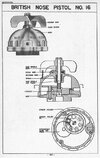
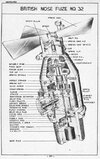
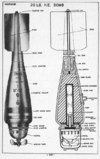
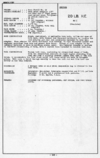
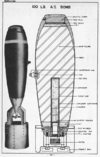
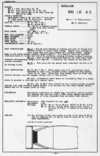

Just curious how "common / uncommon" either the No 16 (or No 7) pistols are to find today?
Are those pages from AP1661? Thanks
I have only found one example of the No7 Pistol. in Australia. I say rather hard to find. Dated 1918.Just curious how "common / uncommon" either the No 16 (or No 7) pistols are to find today?