What's new
British Ordnance Collectors Network

Join over 14,000 collectors of inert military ordnance. Get expert identification help for shells, fuzes, grenades, and more — plus access our classifieds marketplace and decades of archived knowledge. Free to register, takes seconds.

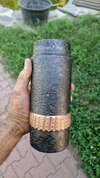
Czech shell ?

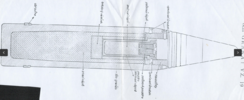
If we were talking about the Czechoslovak version: 8cm Time Grenade vz.19, then in the Czechoslovak regulations it has this design.
1780153009882.png
1780153444978.png
The rim is thin copper... You can also see that the paint was not military for the Czechoslovak Army.
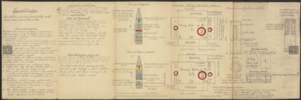
If we go further into history, there is a old-type of the 8cm Granat M.18 type, it looked like this
Snímek obrazovky z 2026-05-30 17-08-24.png
Snímek obrazovky z 2026-05-30 17-19-55.png
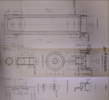
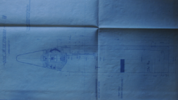
Or laboratory drawings Skoda (war product)
-------
In my opinion, it is an export version or a version that Austria/ Böhler (or another country) had after 1919.
Akon
 
Last edited:
Hi everyone.
Question for experts:
Does anyone have a scan or photo of the original firing tables for these two weapons?
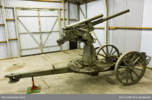
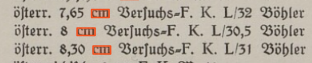
8cm Feldkanon M.17 (Skoda)
8cm Feldkanon M.18 (Böhler)
I'm talking about the ammunition list which is confirmed from the firing tables.
Or maybe a description of the gun, not the material tables.
Thanks
Akon
 
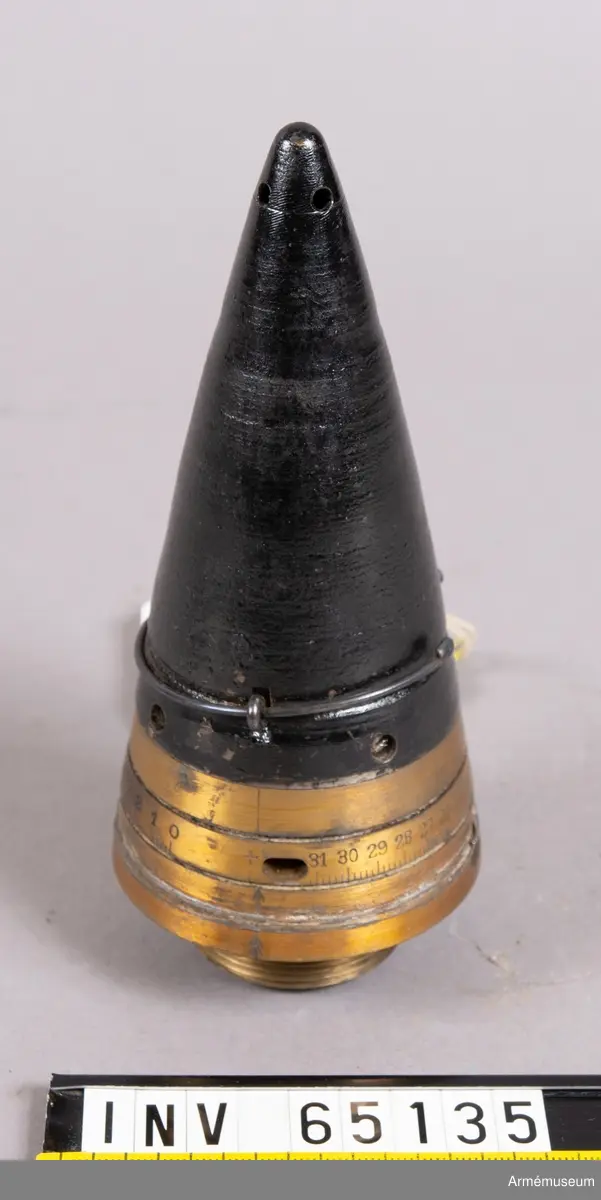
The driving band looks identical to the one from Skoda 8.35cm experimental guns (prior to the adoption of the 8cm M17 Skoda and 8cm M18 Bohler guns).
Later, 8.35cm was also used by Czechoslovakia in various guns.


Here is a GS body from one of those experimental guns. By pure coincidence, i`m working on an article on these guns and their ammunition.
The body, below the band should have a 44mm long section with 83mm diameter.

The driving band has 28 grooves and is 30mm wide.

@AKON_ i only have the few pages from Christian Ortner`s book with the description of the guns, if it helps you.
 

Attachments

  • asdf.jpeg
    asdf.jpeg
    165.5 KB · Views: 16
Last edited:
Hi everyone
-The actual caliber is 76.5mmm for the 8cm Time Grenade vz.19 as well as vz.18.
-The number of grooves for vz.17 and vz.18 is 30 not 38.(If Julien CD counts a different number than 30, it is not a 76.5cm (8cm) caliber
-The predecessor of the 8cm Feldkanon M.17 Skoda type is the experimental type 8cm Feldkanon M.16 Škoda .
I found a mention of: 8cm anti-aircraft gun vz.18/19 Skoda ,exported to France (1921), Sweden and Spain. It was a small number of weapons and ammunition. I don't know the details yet. (I say could, because I don't have the documents yet)

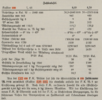
@fert: The number of grooves for the 8cm Flak vz.28 Skoda is also 30. The weight of the time grenade is 8.05kg in the table, the length without the fuze is 286.5mm.

@Irod7: in the Czechoslovak army, the caliber 8.35cm was introduced for the 8.35cm Flak vz.22. The shape of the 8.35cm shel is different and the driving band two apart. As for the experimental cannon during WW1, I have no documents for the ammunition.As for the post-war (after 1918), the 8.35cm naval cannon (marked as 84mm ) was exported by Škoda to Yugoslavia. On the drawings generally in 8.35 cm caliber, there is also a mention of an offer for Switzerland (approx. 1922) . I will write you a PM ...
-umg
 
Last edited:
The driving band looks identical to the one from Skoda 8.35cm experimental guns (prior to the adoption of the 8cm M17 Skoda and 8cm M18 Bohler guns).
Later, 8.35cm was also used by Czechoslovakia in various guns.


Here is a GS body from one of those experimental guns. By pure coincidence, i`m working on an article on these guns and their ammunition.
The body, below the band should have a 44mm long section with 83mm diameter.

The driving band has 28 grooves and is 30mm wide.

@AKON_ i only have the few pages from Christian Ortner`s book with the description of the guns, if it helps you.

Are you referring to Austro Hungarian experimental 8,35cm M17 long range gun?
 
Are you referring to Austro Hungarian experimental 8,35cm M17 long range gun?
I am aware there is at Rovereto one gun (in my opinion - unique in the world) named 8.35cm Schartendemontier Kanone M17, which is made from the carriage of the 10.4cm M15 gun and a barrel in 8.35cm caliber, made with the breech from the former experimental field guns and a very long barrel (we know this because of the markings on the breech).

But i am not talking about that gun.
-The predecessor of the 8cm Feldkanon M.17 Skoda type is the experimental type 8cm Feldkanon M.16 Škoda .
The actual development is a bit more complex than that. There is not only one single gun between the 8cm M5 series and the M17 Skoda.

There have been several rounds of prototypes of field guns in different configuration until the "winner" M17 Skoda. There were four types of prototype configurations in three calibers - 80mm (not 8cm!), 83,5mm and 76,5mm (8cm). All of these configurations were tested in the field, with various results. Some ammunition from these experimental guns can in fact be found in the field, which is the reason why I am writing the article i mentioned, because other than the ground finds i could not find anything published about it... especially for 8.35 cm. Maybe only in the Skoda archives... and maybe @AKON_ has some documentation from them. But in any literature i was not able to find anything.
What i can tell you so far is that the 8cm Vz. 19 design dates back to 1916, fragments from the ground confirm this.
For more details, check Christian Ortner`s book on Austrian artillery - as far as i have been able to find this is the only source that talks about these prototype guns and the development of M17 Skoda and M18 Bohler guns.
 
Hi Irod7
After what I found out, I'm betting on the 8cm Anti-Aicraft cannon vz.18/19 Skoda which was exported in 1921 ...I notice that this found ammunition has been published many times, the last time it was in this thread.As far as I can judge, the author Christian Ortner`s book on Austrian artillery drew mainly from military archives.As you wrote, the matter is more complicated, so it definitely is.Namely, there was a category of weapons named as internal construction, i.e. it was not offered for sale anywhere. It did not even participate in tenders for the supply of any weapons or ammunition. The company was dealing with the development of the construction for future demand or filling the demand or applying some ideas .....Therefore, if you want to describe it, you cannot avoid studying the Skoda archive.To be clear, this is not about coming to the archive for one or two days or you, being smart, writing an e-mail that the archive staff should prepare :) That is doomed to failure. You will eventually get skimmed milk with water added.... Unless another researcher writes a box about an 8cm cannon competition in 19XX and this was used (recycled) for another researcher.So I'm telling you right away that this is not something to wait for and you should immediately get the scanned period information. Here you have to go through thousands of boxes and search them. That's a different level...I've been involved in producing archive inventory for years and I have an idea of the effort involved. In the future, it will be a paid search (research) in a huge database

Akon
 
Top