What's new
British Ordnance Collectors Network

Join over 14,000 collectors of inert military ordnance. Get expert identification help for shells, fuzes, grenades, and more — plus access our classifieds marketplace and decades of archived knowledge. Free to register, takes seconds.

German Fuze

jvollenberg

Well-Known Member
Ordnance approved
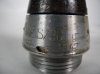
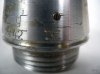
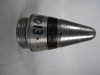
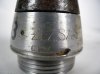
I am wondering about the German Zt.Z.S/30 Fg ...

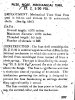
The one I am looking at has a small 1 on the corner of the small g. The old U.S. OP talks about the FGL version of this fuze. Is this what they might have seen as a L. Or are there 2 different versions of this fuze?

Joe
 

Attachments

  • ICE-JV-431-5.jpg
    ICE-JV-431-5.jpg
    108.5 KB · Views: 45
  • ICE-JV-431-4.jpg
    ICE-JV-431-4.jpg
    98.3 KB · Views: 38
  • ICE-JV-431-3.jpg
    ICE-JV-431-3.jpg
    103.8 KB · Views: 32
  • ICE-JV-431-1.JPG
    ICE-JV-431-1.JPG
    223 KB · Views: 34
Zt. Z. S/30

There are two fuzes which are almost identical except for markings.
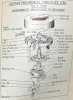
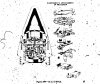
Yours has a centrifugally operated mechanism, but the Zt. Z. S/30 has a clockwork mechanism as picture.
 

Attachments

  • 1 (1).jpg
    1 (1).jpg
    270.8 KB · Views: 31
"Fg" is the abbreviation for "Fliehgewicht" which means centrifugal weight. In the german speaking world I have never heard of a Fgl/FGL. But the Fg1 is well known.
 
So I am assuming the little 1 means: centrifugally operated mechanism? That would make the most sense to me then. As for the L version, the OPs have been wrong before, wouldn't be anything new.

Joe
 
the 1 means that it is a modified model. The Fg1 had a changed fuze housing
 
Last edited:
What marking shows the difference between the centrifugally operated mechanism and the clockwork mechanism?

joe
 
As far as I understant the plain ...S/30 is clockwork and ...S/30Fg is centrifugal.
 
Correct,
with ZtZ S/XX fuzes the ones without Fg are the Krupp-Thiel mech time fuzes (ZtZ S/30, ZtZ S/30[SUP]1[/SUP], ZtZ S/30[SUP]2[/SUP], ZtZ S/5, ZtZ S/45...)
They have a prewind spring and cocked striker.

If there is a Fg the fuze has Junghans centrifugal mechanism.

To make it little more complicated look at Dopp. Z. S/60 designations :)

There was also a MGL german fuze :))

Bob
 
Last edited:
From TM 9-1985-3 Page 597

Just to show I am not crazy ... although maybe they were when they wrote the manual.

Joe
 

Attachments

  • FGL.jpg
    FGL.jpg
    167.6 KB · Views: 18
  • FGL2.jpg
    FGL2.jpg
    265.3 KB · Views: 29
One more question ... On this fuze there is a CCV. What does that mean? In the same spot I have a picture of the same fuze that has a kzn.

Joe
 
The 3 small letters are the factory codes of the manufactureres. ccv I did not find, may be somebody else can. kzn is "Kienzle Uhrenfabrik GmbH, Dammerkirch plant".
One more question ... On this fuze there is a CCV. What does that mean? In the same spot I have a picture of the same fuze that has a kzn.

Joe
 
Your mechanism has various wheels and parts like a clock, but clocks as we know them do not have centrifugal forces which can drive an operating weight towards the outer edge of the fuze. Traditionally, cheaply made clockwork mechanisms require a spring.
 
Just to show I am not crazy ... although maybe they were when they wrote the manual.

Joe

ccv is Rodi & Wienenberger A.-G., Doublé-Ketten, Pforzheim

I would guess that handling objects that are designed to kill people needs a little crazyness :)

The markings on fuzes change slightly from factory to factory and also in one factory in different years.
If the marking on the fuze was hard to read a mistake was there and lived until now :)

Bob
 
isn't that the manufacturer code?
ccv can be found on the document below..

http://claus.espeholt.dk/mediearkiv/waae.pdf

KZN: Kienzle Uhrenfabrik GmbH, Dammerkirch plant

my own edit: next time I'll need to scroll down to page two to see that all questions were answered already.
my apologies.
 
Last edited:
Top