
British Ordnance Collectors Network
You are using an out of date browser. It may not display this or other websites correctly.
You should upgrade or use an alternative browser.
You should upgrade or use an alternative browser.
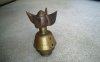
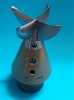
ID fuze from Argentina
- Thread starter no3nh4
- Start date
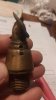
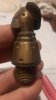
Sweden would be one more candidate, they are using the letter "Ö" too. Finland and Turkey are also using the "Ö" but Finland did not exist until 1917 and Turkey did not use latin letters until 1928. So in my opinion three countries are remaining:
Germany
Austria
Sweden
Germany
Austria
Sweden
German field artillery guns in Argentina:
Argentina in the 19th/early 20th century was mainly equipped with Krupp guns.
The official acquisitions of the Argentinian army were defined as such:
24 cañones de campaña Modelo 1864 – 1873 de calibre 7,85cm L25.6
96 cañones de 7,5cm L24 tracted Modelo 84/89 T97 en 1883-1889 (así figuran) comprados en 1883 y “modificados” en 1889
180 Cañones de 7,5cm L24 tracted Modelo 95 – 1895
180 cañones 7,5 - L28 – M.98 (tiro acelerado)
72 Cañones de 7,5cm L13 de Montaña Modelo 96 – 1896
180 Cañones de 7,5cm L28 heavy Modelo 98 – 1898
36 Obuses de 10,5cm L12 tracted Modelo 98 – 1898
108 Cañones de 7,5cm L13 de montaña Modelo 98 – 1898
The first Krupp gun in Argentina appears to have been the Krupp de 75mm Modelo 1873 then the following Krupp guns entered in service:
1) Krupp 75 mm / L25.6 Model 1880 field gun with horizontal breech and wooden carriage. Krupp breech sliding block
2) Krupp 75 mm / L25.6 (or L24) Model 1884, similar to 1880 but with a iron carriage. Krupp breech sliding block
3) Krupp 75mm / L13 Argentine Model 1884 (modified in 1898) with an iron carriage. Krupp breech was replaced by one of the Maxim-Nordenfelt System
4) Krupp 75mm / L28 Mod.1898 with a new carriage system. Maxim -Nordenfelt System Breech installed in factory
5) Krupp 75mm / L30 field gun Model 1896 - A specific design made for the Argentine Army in 1905. Welin Breech
6) Krupp 75mm / L30 field gun “Modelo Argentino 1909” (Argentine Model 1909). Welin Breech
7) Krupp 130mm L26 Mod.1902 heavy gun. Krupp breech was replaced by one of the Maxim-Nordenfelt System
This last was later modified in 1927 to become the "Krupp de Caballería 75mm L30 Modelo Argentino 1909."
A further modification occured in 1935 by installing the Krupp 75mm L / 30 Modelo Argentino 1909 on a 1933 Bofors gun carriage
In the 1940s the Cañón de montaña Krupp 75mm L / 13 Modelo Argentino 1898 was created by adding a adding a brake system and recuperator to the original gun
To note:
Cañón Antiaéreo Krupp de 75 mm L/24 Modelo Argentino 1927 - attempt made in 1927, to produce an anti-aircraft gun using the barrel of a Krupp 1895 with breech type Maxim-Nordenfelt. (soon replac ed by the Cañón Antiaéreo Skoda C.7,65 cm L / 50 Modelo 1928)
Swedish field artillery guns:
1) Bofors 75mm L / 40 Modelo Argentino 1935, entered i n service in 1935 replacing the Krupp
2) Argentine Navy also purchased in the 1930s a significant amount of naval guns Bofors 105mm L / 45 DP
Argentina in the 19th/early 20th century was mainly equipped with Krupp guns.
The official acquisitions of the Argentinian army were defined as such:
24 cañones de campaña Modelo 1864 – 1873 de calibre 7,85cm L25.6
96 cañones de 7,5cm L24 tracted Modelo 84/89 T97 en 1883-1889 (así figuran) comprados en 1883 y “modificados” en 1889
180 Cañones de 7,5cm L24 tracted Modelo 95 – 1895
180 cañones 7,5 - L28 – M.98 (tiro acelerado)
72 Cañones de 7,5cm L13 de Montaña Modelo 96 – 1896
180 Cañones de 7,5cm L28 heavy Modelo 98 – 1898
36 Obuses de 10,5cm L12 tracted Modelo 98 – 1898
108 Cañones de 7,5cm L13 de montaña Modelo 98 – 1898
The first Krupp gun in Argentina appears to have been the Krupp de 75mm Modelo 1873 then the following Krupp guns entered in service:
1) Krupp 75 mm / L25.6 Model 1880 field gun with horizontal breech and wooden carriage. Krupp breech sliding block
2) Krupp 75 mm / L25.6 (or L24) Model 1884, similar to 1880 but with a iron carriage. Krupp breech sliding block
3) Krupp 75mm / L13 Argentine Model 1884 (modified in 1898) with an iron carriage. Krupp breech was replaced by one of the Maxim-Nordenfelt System
4) Krupp 75mm / L28 Mod.1898 with a new carriage system. Maxim -Nordenfelt System Breech installed in factory
5) Krupp 75mm / L30 field gun Model 1896 - A specific design made for the Argentine Army in 1905. Welin Breech
6) Krupp 75mm / L30 field gun “Modelo Argentino 1909” (Argentine Model 1909). Welin Breech
7) Krupp 130mm L26 Mod.1902 heavy gun. Krupp breech was replaced by one of the Maxim-Nordenfelt System
This last was later modified in 1927 to become the "Krupp de Caballería 75mm L30 Modelo Argentino 1909."
A further modification occured in 1935 by installing the Krupp 75mm L / 30 Modelo Argentino 1909 on a 1933 Bofors gun carriage
In the 1940s the Cañón de montaña Krupp 75mm L / 13 Modelo Argentino 1898 was created by adding a adding a brake system and recuperator to the original gun
To note:
Cañón Antiaéreo Krupp de 75 mm L/24 Modelo Argentino 1927 - attempt made in 1927, to produce an anti-aircraft gun using the barrel of a Krupp 1895 with breech type Maxim-Nordenfelt. (soon replac ed by the Cañón Antiaéreo Skoda C.7,65 cm L / 50 Modelo 1928)
Swedish field artillery guns:
1) Bofors 75mm L / 40 Modelo Argentino 1935, entered i n service in 1935 replacing the Krupp
2) Argentine Navy also purchased in the 1930s a significant amount of naval guns Bofors 105mm L / 45 DP
Last edited:

From a mechanical point of view, the heavy fins on the front end seem to be much more than needed for artillery or bombs. They are actually very heavy and overly thick for those applications and their mass would require a lot of air flow for bombs, and would really over torque for artillery. They would be appropriate for water use, as the water would have a much greater force to have to deal with. Did Argentina use torpedoes or depth charges?
@Hazord: exactly my thoughts too. The fin design of the US "Clarke & Co" naval bombs or pistols for air dropped torpedoes and torpedoes in general is not much different.
Hopefully someone knows this interesting device
I am adding one more possible Country:
Hungary also is using the "Ö"
Hopefully someone knows this interesting device
I am adding one more possible Country:
Hungary also is using the "Ö"
Last edited:

Just an idea, we can read on this fuze a Ö and an M. Could it be possible that we have to do with a superquick - delay fuze, knowing that in the markings of German origin often O means "Ohne Verzögerung" and M "Mit Verzögerung" ?
Yoda
Yoda

Yes - quite an interesting and unusual fuse. I would also echo the fact that it doesn't appear to be designed for artillery or normal aerial bomb usage.
Further comments /thoughts.......
> Argentina purchased Whitehead torpedoes and had approx. 300 in storage by 1910,
> The above fuze doesn't appear to "match" any pre-WW1 Whitehead torpedo impeller(s) (or others) than I'm aware of.
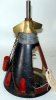
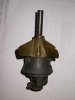
> Whitehead introduced the first "Fan" pistol types in the 1880's, in which I'm making an assumption that the unknown fuze "may" be based upon i.e. a simple arming vane /contact pistol for a torpedo. The Whitehead fan type is shown below for comparison:
> The next development in Whitehead's Fan Pistol design had the impeller attached to the top of the striker mechanism as show in the next photo - introduced in the 1890s (Photo credit to BMG50)
> Whitehead pistols normally had a serial number stamped on them (so did Schwarzkopf)
> From memory, the Clarke bomb fuze was one of the first examples of aerial anti-submarine application (WW1), although its multi-purpose design catered more specifically for scenarios where if the bomb missed the deck of the ship, it could be set to arm and explode at a set depth in the water causing damage to the ship's hull. (Note - it had a very short production life due to overall design complexity & unreliability!)
> The unknown fuze vanes appears to be crudely made and heavy (compare it to the Whitehead examples) as already noted in prior comments (reminds me more of an earth drill bit). However does appear to be more logically suited for marine application.
> It is not known from the photos what the internal mechanism is - may provide extra clues.........
> Could be an experimental /prototype?
Cheers
Drew
Further comments /thoughts.......
> Argentina purchased Whitehead torpedoes and had approx. 300 in storage by 1910,
> The above fuze doesn't appear to "match" any pre-WW1 Whitehead torpedo impeller(s) (or others) than I'm aware of.
> Whitehead introduced the first "Fan" pistol types in the 1880's, in which I'm making an assumption that the unknown fuze "may" be based upon i.e. a simple arming vane /contact pistol for a torpedo. The Whitehead fan type is shown below for comparison:
> The next development in Whitehead's Fan Pistol design had the impeller attached to the top of the striker mechanism as show in the next photo - introduced in the 1890s (Photo credit to BMG50)
> Whitehead pistols normally had a serial number stamped on them (so did Schwarzkopf)
> From memory, the Clarke bomb fuze was one of the first examples of aerial anti-submarine application (WW1), although its multi-purpose design catered more specifically for scenarios where if the bomb missed the deck of the ship, it could be set to arm and explode at a set depth in the water causing damage to the ship's hull. (Note - it had a very short production life due to overall design complexity & unreliability!)
> The unknown fuze vanes appears to be crudely made and heavy (compare it to the Whitehead examples) as already noted in prior comments (reminds me more of an earth drill bit). However does appear to be more logically suited for marine application.
> It is not known from the photos what the internal mechanism is - may provide extra clues.........
> Could be an experimental /prototype?
Cheers
Drew
Attachments
Last edited:

maybe a solution today : https://www.bocn.co.uk/threads/bomb-tail-fin-or-something-completely-different.110208/