What's new
British Ordnance Collectors Network

Join over 14,000 collectors of inert military ordnance. Get expert identification help for shells, fuzes, grenades, and more — plus access our classifieds marketplace and decades of archived knowledge. Free to register, takes seconds.

Maker of No.80 Mk IIIA fuze?

Darkman

Well-Known Member
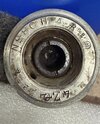
Does anyone know the maker of this No. 80 Mk IIIA fuze I have please? Back-to-back Rs.
Thanks, Graeme

IMG_1190.jpeg
 
Interesting fuze.
The only RR back to back monograms I know are Reuter & Reynolds also Richard Rinker German grenade maker.
I have no references that these people made fuzes or No80. It must be British?
 
RR is not the make but a Romanian acceptance mark.
Thanks Hoeksel. Unusual. Do you know what ordnance Romania might have used these fuzes on pre-WW1? (Given the fuze thread is 2” x 14 TPI Whitworth.) And how such a fuze ended up in Australia? Mk IIIA fuzes date from about 1911-1912
 
Last edited:
No, but give it some time as I know there are some knowledgeable Romanian collectors on BOCN that probably know more. I just recognize the RR logo from my own research on Krupp shell cases that includes Romanian ones.
 
Hello,

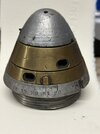
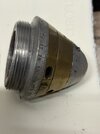
@Darkman Is it possible to post some more side photos with the fuze? I think it`s not a standard No.80 but rather reworked into something else. I noticed the flange on your fuse does not have the lip that is usually visible on No. 80`s and it also has a notch (at 8 o` clock in your photo) that i can`t see on other No. 80`s.

@Hoeksel is correct to point out that the back-to-back RR`s are a Romanian artillery acceptance stamp used circa 1900-1917. However, the only british gun in use by the Romanian Army during ww1 were a bunch of old 5 inch howitzers, which, as far as i know, do not use No. 80 fuzes. Another british gun was the 4.5 inch howitzer, introduced in service in 1918, but those (and their ammunition) were captured from the Russians, they were not part of a government contract, so we should not expect such markings for them.
So it`s either a coincidence, or something very interesting :)
We will be able to tell more once you post some more photos of it.

 
Hello,

@Darkman Is it possible to post some more side photos with the fuze? I think it`s not a standard No.80 but rather reworked into something else. I noticed the flange on your fuse does not have the lip that is usually visible on No. 80`s and it also has a notch (at 8 o` clock in your photo) that i can`t see on other No. 80`s.

@Hoeksel is correct to point out that the back-to-back RR`s are a Romanian artillery acceptance stamp used circa 1900-1917. However, the only british gun in use by the Romanian Army during ww1 were a bunch of old 5 inch howitzers, which, as far as i know, do not use No. 80 fuzes. Another british gun was the 4.5 inch howitzer, introduced in service in 1918, but those (and their ammunition) were captured from the Russians, they were not part of a government contract, so we should not expect such markings for them.
So it`s either a coincidence, or something very interesting :)
We will be able to tell more once you post some more photos of it.
Thanks for the reply Irod7,
It’s just a fairly standard and unmodified No. 80 Mk IIIA fuze as far as I can tell.
Mk IIIA had an aluminium body with no lip - the lip wasn’t introduced until the Mk IV that had a brass skirt screwed on.
I’d still be interested in what use the Romanians had for this fuze.
Thanks, Graeme

IMG_1259.jpeg IMG_1260.jpeg
 
Top