What's new
British Ordnance Collectors Network

Join over 14,000 collectors of inert military ordnance. Get expert identification help for shells, fuzes, grenades, and more — plus access our classifieds marketplace and decades of archived knowledge. Free to register, takes seconds.

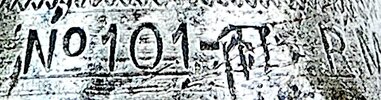
No 101 11 Steel Fuze.

ron3350

Well-Known Member
I ask how common are all steel fuzes?
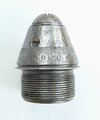
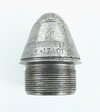
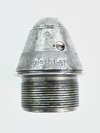
This RMC No101 11 4-17 LOT 720 9970 is Canadian by Russell Motor Car Co Ltd Toronto made for UK.
R^L 6/17 ^ possibly when filled or approved.
It has a knurl instead of the rings. Are knurls found only on Canadian fuzes or British also?

The mark looks like 11 but has scratches or a bad stamp mark.
 

Attachments

  • 101 a.jpeg
    101 a.jpeg
    308.7 KB · Views: 16
  • 101 a copy.jpeg
    101 a copy.jpeg
    64.3 KB · Views: 17
  • 101 b.jpeg
    101 b.jpeg
    332.4 KB · Views: 15
  • 101 c.jpeg
    101 c.jpeg
    314.6 KB · Views: 17
The Metals and Materials Economy Committee of the Ministry of Munitions decided in October 1916 that No.101 and No.106 fuzes should be manufactured in cast iron as an alternative to brass which was being obtained at great expense from the US. A significant saving in brass occurred, but was offset by the cost of machining the CI blanks and the difficulty of effectively rust proofing the finished items.

No mention seems to be made in MoM papers of steel fuzes, so steel ones of Canadian manufacture were likely their own decision for a cheaper alternative to brass but also a more easily machined alternative to cast iron. Extant examples would appear to be uncommon.

List of Changes paragraph 18282 of 1917 states for the No.101 MkII: "A 0.25-inch knurled or grooved ring is formed on the body to denote that the fuzes are not fitted with the cross pellet..."

The marking is not 11 (Arabic eleven) but II (Roman two). Only two different marks of the No.101 were produced, no where near eleven, although there were a host of variations of shutter, detent spring strength and needle length. (In any case, in British service Roman numerals were used to denote mark number until October 1944, when replaced by Arabic.)
 
Top