Join over 14,000 collectors of inert military ordnance. Get expert identification help for shells, fuzes, grenades, and more — plus access our classifieds marketplace and decades of archived knowledge. Free to register, takes seconds.
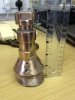
The first picture shows what they normally look like when pulled out of the ground (note the driving band). This one is attached to a Mk III 25 Pdr.
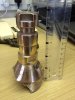
They were used with chemical projectiles to allow for the testing and evaluation of the dispersal patterns. Instead of firing a projectile and then trying to plot the pattern of agent droplets, you could set a static projectile and witness plates, fire it remotely and then observe the agent pattern. (Second picture)
This one isn't a 106 but you get the idea.
Thanks for the images and explanation. I have not seen them but there are a number of designs of electrical versions of standard fuzes in the CINO/NOD drawing list. I had assumed that they were either for static firing at Woolwich etc., or for scuttling ships. If I locate the drawings I'll be sure to send you copies.
This site uses cookies to help personalise content, tailor your experience and to keep you logged in if you register.
By continuing to use this site, you are consenting to our use of cookies.