
British Ordnance Collectors Network
You are using an out of date browser. It may not display this or other websites correctly.
You should upgrade or use an alternative browser.
You should upgrade or use an alternative browser.
Projectile 1914-1918.
- Thread starter JulienCD68
- Start date
JulienCD68
Well-Known Member
Thanks Alpini.You also don't see it in the drawing? Or what are you wondering about?
Is this the detail that indicates the hexagonal base?
Or is it written in the description?
Thanks again.
Attachments


Hello Chris & Julien,
Yes now you both found the important detail in the drawing.
It's also mentioned in the text but not the reason for the screwed base. If not a cardboard or copper container was a reason for the screwed base it may have been the material. The shell is made from thin walled steel because it works better than a thick walled cast iron body. And monoblock steel shells with "bottle shape" were very difficult to forge. France, maybe the Schneider company may have been the first which found a way to mass produce such forged shells. Most countries used two piece steel shells with screwed heads or bases before frist world war.
Yes now you both found the important detail in the drawing.
It's also mentioned in the text but not the reason for the screwed base. If not a cardboard or copper container was a reason for the screwed base it may have been the material. The shell is made from thin walled steel because it works better than a thick walled cast iron body. And monoblock steel shells with "bottle shape" were very difficult to forge. France, maybe the Schneider company may have been the first which found a way to mass produce such forged shells. Most countries used two piece steel shells with screwed heads or bases before frist world war.
Last edited:


JulienCD68
Well-Known Member
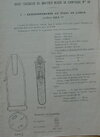
JulienCD68
Well-Known Member
We now need to identify a Russian 152mm mortar with 20 grooves.
What is the title of this intelligence bulletin ?Hello,
The solution was discovered in a French intelligence bulletin from 1917.
Probably for the 152mm M1885 Field Mortar or a later model year incarnation. The piece was based on a Krupp design, but manufactured in Russia from 1885 till 1902. Retired from service in 1922.
Standard HE shell weighed 30.7 kg with fuze, Melanite filled. Range is listed as 3700 m with a MV of 229 m/s.
Standard HE shell weighed 30.7 kg with fuze, Melanite filled. Range is listed as 3700 m with a MV of 229 m/s.
JulienCD68
Well-Known Member
Thank you.
Do you have any photos of it?
The document is an "Bulletin de Renseignement de la 7ème Armée".
Source: SHD
Do you have any photos of it?
The document is an "Bulletin de Renseignement de la 7ème Armée".
Source: SHD

Hello,
here mortar Mod 1885
 landships.info
and two mortar mentioned in the manual
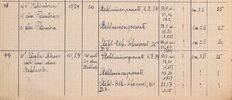
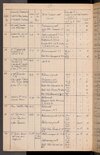
regards
here mortar Mod 1885
Landships II
and two mortar mentioned in the manual
regards
JulienCD68
Well-Known Member
Thanks.
All that remains is to find some period photos.
All that remains is to find some period photos.
panzergraf
Member
Love the "Jetz(t) geht's los" (here we go) on the "Deminage Colmar" patch. Happy new year to all of you.
..Mortar,,
6" field steel mortar sample 1885 г. Germany Russian project -(Krupp/Obuchovsky plant. Produced: in 1890- 48 pcs; 1894-96 pcs to 1900 - 7 pcs.
Part produced by Krupp and the greater part in Russia.
In the years 1888-1890, 20 mortar regiments were formed with a total of 20 batteries.
Sometimes the designation is used after the designer of the system Engelgardt ...i.e. long-barreled version (because there was still a short-barreled version (only 4 pieces).
Sources include

 pix009.livejournal.com
 yuripasholok.livejournal.com
----------------------------------------------------------------------------------------------------------------------------------------------------------------------------------------------------------------
yuripasholok.livejournal.com
----------------------------------------------------------------------------------------------------------------------------------------------------------------------------------------------------------------
6" field steel mortar model 1891/1904 (total 229 pieces of all versions are listed)
6" copper mortar model 1867. Later modified by inserting an iron insert into the barrel, i.e. 1896/1906.
----------------------------------------------------------------------------------------------------------------------------------------------------------------------------------------------
The list does not include samples or prototypes ...
6" field steel mortar model 1885https://ru.wikipedia.org/wiki/...

 ru.wikipedia.org
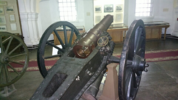
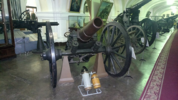
6" field steel mortar sample 1885 г. Germany Russian project -(Krupp/Obuchovsky plant. Produced: in 1890- 48 pcs; 1894-96 pcs to 1900 - 7 pcs.
Part produced by Krupp and the greater part in Russia.
In the years 1888-1890, 20 mortar regiments were formed with a total of 20 batteries.
Sometimes the designation is used after the designer of the system Engelgardt ...i.e. long-barreled version (because there was still a short-barreled version (only 4 pieces).
Sources include
Артиллерия Мотовилихи. Часть I.
Часть 1-я списка спецпродукции Мотовилихинских заводов с 1863 года по настоящее время. Список составлен исключительно на основе открытых источников. В первом разделе будут даны орудия ствольной артиллерии, систематизированные по калибрам, от малых до крупных, серийные и опытные образцы,…
pix009.livejournal.com
Русский крупный калибр с немецким исходником
Во второй половине XIX века началось стремительное развитие как стрелкового оружия, так и артиллерии. Дульнозарядные орудия стали историей, случился переход на казнозарядные системы. Вместо ядер стали использовать унитарные патроны и выстрелы раздельного заряжания. Менялась и система вооружения.…
yuripasholok.livejournal.com
6" field steel mortar model 1891/1904 (total 229 pieces of all versions are listed)
6" copper mortar model 1867. Later modified by inserting an iron insert into the barrel, i.e. 1896/1906.
----------------------------------------------------------------------------------------------------------------------------------------------------------------------------------------------
The list does not include samples or prototypes ...
6" field steel mortar model 1885https://ru.wikipedia.org/wiki/...
Многоточие — Википедия
I guess no one is left with this, but I will try to direct those interested in more detailed technical and tactical information ...
i.e. where and mainly what to look for
So far, the only Russian contemporary source I have found is the third edition of this publication with more than 333 pages from 1916.
By the way, the first edition of this book was published in 1906.
The index shows how the book is designed / what it addresses.
If you have anything else, let me know
: 1916
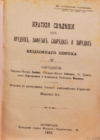
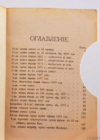
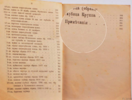
: 1906
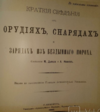
Source (picture) : e-comerce book /violity.ua
Akon
i.e. where and mainly what to look for
So far, the only Russian contemporary source I have found is the third edition of this publication with more than 333 pages from 1916.
By the way, the first edition of this book was published in 1906.
The index shows how the book is designed / what it addresses.
If you have anything else, let me know
: 1916
: 1906
Source (picture) : e-comerce book /violity.ua
Akon
Since we do not yet have a detailed photo of the shell to be able to write which manufacturer produced the mechanical components, we will not move further for now. But what can we say
Instead, we only have one certainty that the laboratory was carried out by OPZ.
When we go by the name of the laboratory plant listed on the drawings of the regulation (see link above) we come across the phenomenon: OPZ (Ochtinsky Powder Plant)
As a Central European, I do not normally have knowledge of the history, capacities, locations or details of the explosives industry in Russia. Even less its beginnings until 1896 when its industrial production was started in Russia.
After searching for anything that enlightened me about history, I found a significant number of monographs ... Any effort in the age of the Internet is nothing compared to going to the library
In relation to ammunition and especially dating ammunition, the turning point was 1902 when this originally one plant was divided into 3 (2?) separate entities, the first was the Powder Plant, the second was the Explosive Plant and the third was the Capsule Plant (i.e. initiators). As you can probably guess correctly, during those more than 200 years, the plant had different names.
I'm going back to ammunition ... in the drawings of the above-quoted regulation, i.e. in his manuscript (dated 1917), the state (the documents from which the author drew) is captured after 1902 when it was divided into three separate plants. And therefore it has a logical template, i.e. OZBB (Ochtinsk explosives plant) , i.e. already an explosives production plant. This is the first indication of how to date the bullet (rough range of years for now 1902 to 1918)
What can be studied on this topic:
Today the factory archive fund is located in the archive in St. Petersburg.
The fund is fully inventoried and has 7 inventories. The total contains over >1600 documents, including ammunition drawings.
Some drawings were published in preview quality on various sites. I will give an example of one drawing: 6 inch mortar (6 inch mortar with a redesign by inserting a steel barrel into the originally copper mortar.. is listed in the book's inventory)
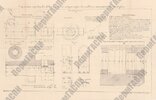
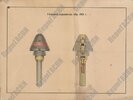
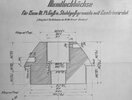
Interesting fact: In the archive there is a drawing of the M.15 head fuze. Originally a design by Škoda Works, but when I compare it with the original it is different. It is a version that I have not known before. The text states that when unscrewing from a 6 inch shell the M.15 fuze exploded. I do not yet know who designed it, when and why.
Instead, we only have one certainty that the laboratory was carried out by OPZ.
When we go by the name of the laboratory plant listed on the drawings of the regulation (see link above) we come across the phenomenon: OPZ (Ochtinsky Powder Plant)
As a Central European, I do not normally have knowledge of the history, capacities, locations or details of the explosives industry in Russia. Even less its beginnings until 1896 when its industrial production was started in Russia.
After searching for anything that enlightened me about history, I found a significant number of monographs ... Any effort in the age of the Internet is nothing compared to going to the library
In relation to ammunition and especially dating ammunition, the turning point was 1902 when this originally one plant was divided into 3 (2?) separate entities, the first was the Powder Plant, the second was the Explosive Plant and the third was the Capsule Plant (i.e. initiators). As you can probably guess correctly, during those more than 200 years, the plant had different names.
I'm going back to ammunition ... in the drawings of the above-quoted regulation, i.e. in his manuscript (dated 1917), the state (the documents from which the author drew) is captured after 1902 when it was divided into three separate plants. And therefore it has a logical template, i.e. OZBB (Ochtinsk explosives plant) , i.e. already an explosives production plant. This is the first indication of how to date the bullet (rough range of years for now 1902 to 1918)
What can be studied on this topic:
Today the factory archive fund is located in the archive in St. Petersburg.
The fund is fully inventoried and has 7 inventories. The total contains over >1600 documents, including ammunition drawings.
Some drawings were published in preview quality on various sites. I will give an example of one drawing: 6 inch mortar (6 inch mortar with a redesign by inserting a steel barrel into the originally copper mortar.. is listed in the book's inventory)
Interesting fact: In the archive there is a drawing of the M.15 head fuze. Originally a design by Škoda Works, but when I compare it with the original it is different. It is a version that I have not known before. The text states that when unscrewing from a 6 inch shell the M.15 fuze exploded. I do not yet know who designed it, when and why.
Last edited:
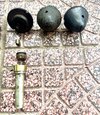
Hi Fert
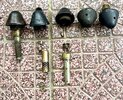
ad ) M.15 (Russian version), as if I knew that you would find the drawing useful
The thing is even more complicated than it seems, there is also the M.15 B version. It has a different size of the fuse body (for 15cm)
By the way, doesn't the M 15 (Russian version) have anything written on it or any markings in Cyrillic?
Akon
-----
I'm waiting for the war to end so I can do research in the archives...
ad ) M.15 (Russian version), as if I knew that you would find the drawing useful
The thing is even more complicated than it seems, there is also the M.15 B version. It has a different size of the fuse body (for 15cm)
By the way, doesn't the M 15 (Russian version) have anything written on it or any markings in Cyrillic?
Akon
-----
I'm waiting for the war to end so I can do research in the archives...
Last edited:
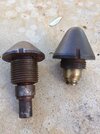
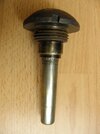
JulienCD68
Well-Known Member
Thank you for the additional information.