What's new
British Ordnance Collectors Network

Join over 14,000 collectors of inert military ordnance. Get expert identification help for shells, fuzes, grenades, and more — plus access our classifieds marketplace and decades of archived knowledge. Free to register, takes seconds.

Russian 120mm krupp

120/50-mm Guns of the First and Second Patterns

The appearance of 120/50-mm guns in Russian artillery was connected with the experience of the Russo-Japanese War. Initially, the War Ministry attempted to obtain 120/45-mm Canet guns from the Naval Ministry, but this was unsuccessful. Therefore, in 1905, Russia purchased 24 guns from Vickers, with a caliber of 120 mm and a barrel length of 50 calibers. They arrived in Libava that summer, after which 22 guns were sent to Harbin. They saw practically no combat during the war against Japan.

120/50-mm Gun of the First Pattern

The guns purchased from Vickers received the designation 120/50-mm Gun of the First Pattern from the Main Artillery Directorate (GAU). Production of the same type of gun was subsequently established at the Obukhov Steel Works. The gun was primarily a naval system and was installed on various ships of the Russian fleet.

Thus, the First Pattern became the original design on which later variants of the 120/50-mm gun were developed for different operating conditions.

120/50-mm Gun of the Second Pattern

The Second Pattern was not a fundamentally new system; rather, it was a further development of the 120/50-mm gun of the First Pattern. The main artillery components were retained, but the design was modified to meet the requirements of the War Ministry and to allow the gun to be used as coastal artillery.

Particular attention was paid to the gun mounting and to the possibility of installing it on different types of foundations. The gun had good ballistic performance and relatively low weight, allowing it to be mounted on both concrete and wooden foundations.

The first Second Pattern gun was tested at the Main Artillery Test Range in 1912–1913. A total of 230 rounds were fired during the trials, with a muzzle velocity reaching 930 m/s. However, the trials revealed a deficiency in the mounting: firing caused significant displacement of the aiming mechanisms, reaching up to 40° in elevation and 50° in traverse. This deficiency required structural corrections.

As a result, by the beginning of the First World War there were two closely related variants of the same 120/50-mm artillery system: the First Pattern, representing the original Vickers design and its Russian production, and the Second Pattern, a modified version adapted primarily for coastal use.

The subsequent widespread use of 120/50-mm guns led to their employment not only in coastal defense and aboard ships, but also on the land front.


the photos of the canon are related to the second model of the russian vickers 120mm thats adopted for the land use.

Basically its the same gun wich verifies my thesis , but its been produced diffrently wich lead to ballistical improvement.
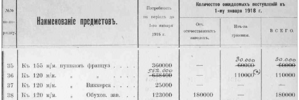
Numbers and placement of weapons on ships in 1916... or possibly on the coast.
1789729705156.png
1789728964188.png
1789729004903.png

Russia placed orders with Japan for shell casings and other components for 120mm weapons—systems that were also in service there...
---

1789731177828.png
1789731211068.png
An enormous quantity...
Akon
 
Last edited:
Numbers and placement of weapons on ships in 1916... or possibly on the coast.
View attachment 211632
View attachment 211630
View attachment 211631

Russia placed orders with Japan for shell casings and other components for 120mm weapons—systems that were also in service there...
Akon
Well this info might be useful but at my location im dealing with (Таон) artillery battery unit , thats related to the 12th army in early 1917 and late 1916.
Il just check the state lists , but before we have to define the shell , il post it tomorrow
 
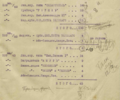
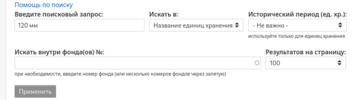
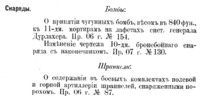
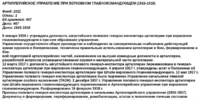
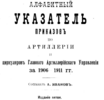
There are collections of GAU orders spanning the years 19XX –1918 ...; you can search them using keywords—for example, "shrapnel," "12cm," "Krupp," and so on. This means you can find information regarding the handling of specific ammunition and weapons in a given year. Naturally, this includes the introduction of the weapons themselves and various technical details—such as revisions to ammunition blueprints.

1789735620283.png
1789735742263.png
Example:
1789734752460.png

1789734803392.png
>>>>
1789735084808.png
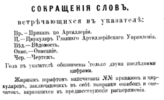
That is one possibility of where to look... the names of the sources you will encounter during your search.
....
I assume that the option to search on the online.archives.ru website is actually blocked for you.Without it, you have virtually no way to search across all the collections at once...

Akon
 
Last edited:
Excerpt from Russia's plan for the procurement of ammunition (1918) from abroad:
- 120mm ammunition:for French guns – from abroad
-for 120mm Obukhov guns – this item was planned for procurement from Russian munitions factories.
for 120mm Vickers... – from abroad.


View attachment 211648
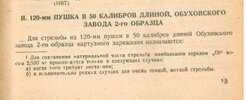
So my fellow comrades shared descriptional book.
Well my shell is not related to 120mm/50.
Today il take measurements of my shell .
 

Attachments

  • Screenshot_20260919_141141_ReadEra.jpg
    Screenshot_20260919_141141_ReadEra.jpg
    1.6 MB · Views: 8
  • Screenshot_20260919_141225_ReadEra.jpg
    Screenshot_20260919_141225_ReadEra.jpg
    730.7 KB · Views: 8
  • Screenshot_20260919_141248_ReadEra.jpg
    Screenshot_20260919_141248_ReadEra.jpg
    799.9 KB · Views: 8
  • Screenshot_20260919_141301_ReadEra.jpg
    Screenshot_20260919_141301_ReadEra.jpg
    439.3 KB · Views: 6
  • Screenshot_20260919_141328_ReadEra.jpg
    Screenshot_20260919_141328_ReadEra.jpg
    174 KB · Views: 5
  • Screenshot_20260919_141341_ReadEra.jpg
    Screenshot_20260919_141341_ReadEra.jpg
    754.6 KB · Views: 5
  • Screenshot_20260919_141353_ReadEra.jpg
    Screenshot_20260919_141353_ReadEra.jpg
    709.3 KB · Views: 8
Hi AM 16
- The overview of the ammunition procurement plan certainly does not address ammunition for the Krupp 12cm howitzer.
- It will certainly be interesting to take a look at that projectile.
- The regulations for the 120mm L/50 gun ammunition do not list the German ammunition for the Krupp 12cm howitzer at all—because it was not compatible with that type of weapon.
- This means there must be documents somewhere dealing specifically with German and Russian ammunition for those 12cm howitzers...
- Ballistic tables for the Krupp 12cm howitzer were certainly issued...

Akon
----
I will also add the second item from the list for future orders... from the source: https://www.prlib.ru/item/361066
1789819342275.png
 
Last edited:
Hi AM 16
- The overview of the ammunition procurement plan certainly does not address ammunition for the Krupp 12cm howitzer.
- It will certainly be interesting to take a look at that projectile.
- The regulations for the 120mm L/50 gun ammunition do not list the German ammunition for the Krupp 12cm howitzer at all—because it was not compatible with that type of weapon.
- This means there must be documents somewhere dealing specifically with German and Russian ammunition for those 12cm howitzers...
- Ballistic tables for the Krupp 12cm howitzer were certainly issued...
Akon
This is not related to krupp , its just a info that declines the 120mm/50 canon theory.

About krupp il take a look separatly.
 
Hi AM 16
There is also the option of searching through the company documentation...
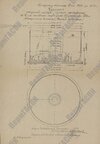
For instance, there is a shell-filling plant here, and this public drawing is available on their website as part of the collection... I assume there is more material regarding 12cm ammunition in this archival collection.

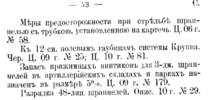
РГАНТД. Фонд 394, опись 3-2, дело 134 л 1. Латунная гильза русского изготовления к 12-см. полевым гаубицам Круппа образца 1904 г. 1909 г.
12cm_ctg.jpg
Note the text accompanying the drawing... There are plenty of other links where you can find additional information.
Akon
-We still have two mysterious 2various : 12cm experimental howitzers from two Russian arms factories...
what we know is that they had a 22.5kg shell and the ballistics were the same for both... I don't know anything else yet
This author talks about it....
 
Last edited:
Hi AM 16
There is also the option of searching through the company documentation...
For instance, there is a shell-filling plant here, and this public drawing is available on their website as part of the collection... I assume there is more material regarding 12cm ammunition in this archival collection.

РГАНТД. Фонд 394, опись 3-2, дело 134 л 1. Латунная гильза русского изготовления к 12-см. полевым гаубицам Круппа образца 1904 г. 1909 г.
View attachment 211662
Note the text accompanying the drawing... There are plenty of other links where you can find additional information.
Akon
-We still have two mysterious 2various : 12cm experimental howitzers from two Russian arms factories...
what we know is that they had a 22.5kg shell and the ballistics were the same for both... I don't know anything else yet
This author talks about it....
Well how dissapointing it can be , as the accuracy of field measurements with poorly cleaned shell surface.
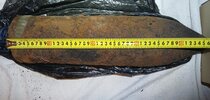
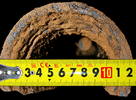
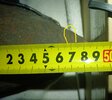
My shell is 122mm , and 47.2 cm in length without the fuze.
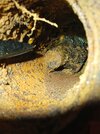
Btw admins dont delete this , the booster exploded long time ago wich can be seen on the photo.
Fuze is gt 4
The charge is suppouse where tnt.
Anyways i have to thank you for the reasearch , it gave me motivation to study artillery pieces that i wouldnt have glanced at for a long time.
 

Attachments

  • 20260919_195533.jpg
    20260919_195533.jpg
    1.9 MB · Views: 3
  • 20260919_195507.jpg
    20260919_195507.jpg
    1.6 MB · Views: 4
  • file_00000000757c8243b036c8671d85db9c.png
    file_00000000757c8243b036c8671d85db9c.png
    2.1 MB · Views: 4
  • 20260919_200002.jpg
    20260919_200002.jpg
    2.1 MB · Views: 4
Well how dissapointing it can be , as the accuracy of field measurements with poorly cleaned shell surface.
My shell is 122mm , and 47.2 cm in length without the fuze.
Btw admins dont delete this , the booster exploded long time ago wich can be seen on the photo.
Fuze is gt 4
The charge is suppouse where tnt.
Anyways i have to thank you for the reasearch , it gave me motivation to study artillery pieces that i wouldnt have glanced at for a long time.
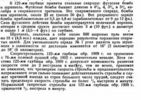
I belive this is the left one
 

Attachments

  • Screenshot_20260919_232324_ReadEra.jpg
    Screenshot_20260919_232324_ReadEra.jpg
    501.3 KB · Views: 3
  • Screenshot_20260919_232303_ReadEra.jpg
    Screenshot_20260919_232303_ReadEra.jpg
    83.3 KB · Views: 3
Well how dissapointing it can be , as the accuracy of field measurements with poorly cleaned shell surface.
My shell is 122mm , and 47.2 cm in length without the fuze.
Btw admins dont delete this , the booster exploded long time ago wich can be seen on the photo.
Fuze is gt 4
The charge is suppouse where tnt.
Anyways i have to thank you for the reasearch , it gave me motivation to study artillery pieces that i wouldnt have glanced at for a long time.
So, we’ve wrapped up the information-gathering exercise on 12cm weapons/ammunition in Russia...
------
Next exercise topic: research on 122mm weapons/ammunition up to 1918.

Who designed, manufactured, imported, tested, or commissioned what—designs, specifications, and so on. That’s the general idea; I’ll leave the rest to you and just casually check on your progress. I have to say, you’re well-versed in the sources—knowing exactly what is written where—since you recognized that treatise just from the illustration... that’s great. Just keep working on it and stick to the topic; while it’s good to have a general understanding of everything, it’s even better to be a top expert on a specific state, its calibers, and the specific models involved :) Suggestions: The Projectile: clean off the rust, and then we’d love to see a photo :)
Akon

1789854223105.png
48  _32704848_4708.jpg
 
Last edited:
So, we’ve wrapped up the information-gathering exercise on 12cm weapons/ammunition in Russia...
------
Next exercise topic: research on 122mm weapons/ammunition up to 1918.

Who designed, manufactured, imported, tested, or commissioned what—designs, specifications, and so on. That’s the general idea; I’ll leave the rest to you and just casually check on your progress. I have to say, you’re well-versed in the sources—knowing exactly what is written where—since you recognized that treatise just from the illustration... that’s great. Just keep working on it and stick to the topic; while it’s good to have a general understanding of everything, it’s even better to be a top expert on a specific state, its calibers, and the specific models involved :) Suggestions: The Projectile: clean off the rust, and then we’d love to see a photo :)
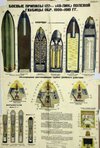
Akon

View attachment 211673
View attachment 211672
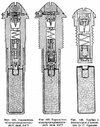
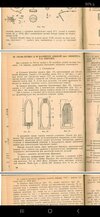
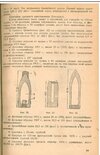
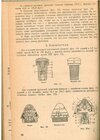
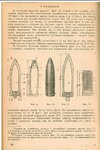
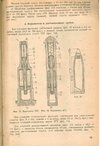
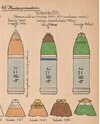
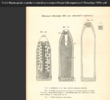
The first picture thats from artillery manual for 122 and 76 artillery pieces , well the central shell is a picric acid shell the lenght is 3.25 calibers and the right one is 4.5 , wich is
39.65 cm in lenght and 54.9 cm.
WIch is no match.
 
Hi AM16
I think you are looking for something that was never actually produced—specifically, German shells made by Krupp equipped with 4GT or 14GT fuzes.
Even at the time the weapons and ammunition were purchased, it was clear that the ammunition supply would not last for the weapon's entire service life.
Russia’s strategic thinking was certainly that it would manufacture the ammunition domestically.
And that is exactly what happened; furthermore, they already had their own munitions plants and manufacturers of explosives and initiators, so it was not a problem.


-120/45 Canet (France), adopted by the Russian Navy in 1892. Produced under license in Russia.
12cm naval shell (Canet), 23 kg, 2.87 kg TNT. ...​


Interestingly, in 1905, the Krupp:
-12cm (119mm; 47 ,,) howitzer was adopted as the Model 1905 (even though the initial concept had been for a 122mm caliber)...
Ammunition: 12cm melinite shell, 21 kg, 2.05 kg melinite. 12cm howitzer shell, 21 kg, 2.56 kg TNT.
It made a one-off purchase of weapons from Krupp and acquired additional units from Japan...
-122mm (48 ,, ) (Путиловского и Обуховского заводов) also introduced in 1905.
.....


After a short period of service, a new requirement for fuzes emerged—specifically, bore safety—which neither the German fuzes nor those of earlier Russian designs could meet... consequently, Russian-designed fuzes such as the ,,safe,, 4GT, 14GT, and others were introduced...


It’s one of those cases where the timeline matters more than the individual component. In a Playfina Casino https://playfinacasinos.fr you see something similar with games and slots: later systems may look compatible with older setups at first glance, but once you follow the sequence of changes, it becomes clear why they belong to a different generation.

The Russian fuzes make more sense in that timeline, so the shell body and driving band may well be domestic too, not a missing Krupp variant.
 
An older Russian manual (for the 122mm Model 1909 (Krupp) howitzer lists four different lengths for explosive shells (expressed as multiples of the caliber) and notes that they are filled with TNT:
- 4 1/2
- 4
- 3 3/4?
- 3 1/4

Akon


Snímek obrazovky z 2026-09-20 02-10-08.png
 
Top