What's new
British Ordnance Collectors Network

Join over 14,000 collectors of inert military ordnance. Get expert identification help for shells, fuzes, grenades, and more — plus access our classifieds marketplace and decades of archived knowledge. Free to register, takes seconds.

SB-800 RS Kurt

AKON_

Well-Known Member
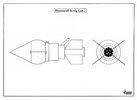
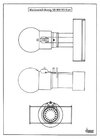
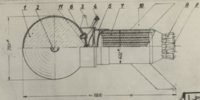
1793747414003.png
Hi alles
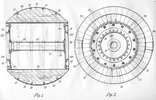
I don't know much about this drawing, so I'm interested in .
SB-800-RS Kurt
Target type: anti-ship (attacking the hull below the waterline)
Part I.
What was the hydrostatic 10m (impact?? ) fuse - (position 2)
What was the electric fuse -position 6
The designation of this pyro-system -position 4
What was the igniter for the rocket engine ignition -position 11
Part II
Any other questions ....
Number of pieces – approx. 300
Developments in the years 1943–1944.

Akon
 
Last edited:
This is the info I gathered a long time ago from a thread in the defunct wk2ammo.com forum and from the "secret projects" forum.

SB 800 RS "Prismen Rollbombe" (also initially designated as Kugelbombe/RZ 100) Kurt 1 (spherical bouncing bomb and initial RZ100 rpopelled model) and Kurt 2 (with added imnproved rocket section)

Designed to be used attacking Russian dams, inspired by Barne Wallis bouncing bomb.
Weight: Approximately 780 kg to 800 kg, including the spherical warhead approximately 750mm in diameter and weighing 400-450 kg.
Thickness of case : 12-mm thick ST-52R welded steel.
Filling: Filled with 385kg cast hexanite

Propulsion: Equipped with a rocket engine designed to accelerate the device up to speeds of 330 m/s within 3 seconds.
Propulsing Body: The cylindrical mid-section housed a gyro unit which is operated by a gas evolved from a burning element.
It also housed the lifting lug and the explosive coupling which severed the warhead from the propulsion unit.
The rocket section is a steel cylinder housing the RZ 100 rocket engine with 420-mm of diameter, 846-mm length and 85 kg of Diglycol propellant, rated at 7,000 kg peak thrust and 2.8 seconds life. It included 18 venturi.
The weight of the propellant was approximately 90 kg.

The RZ 100 rocket engine was soon replaced by a steel cylinder with a length of 600-mm and a diameter of 300-mm containing the engines of fourteen R4M air-to-air rockets each rated at 245 kg peak thrust.
The new design included significant aerodynamic modifications to reduce drag: the box tailplane assembly was replaced by four tailfins made of 7.5-mm thick plywood and a detachable nose cone was added.
A warhead separation system was also installed consisting of springs compressed to 1,000 kg that were released by means of an explosive bolt.


Tail: The initial air tail was the same as used with the BT bombentorpedo. Made of plywood, its elevators were controlled by the gyro.
Dimensions of the nitial air tail : 370 x 560 x 1,270 mm
Flight tests of the Kurtbombe showed that the drag generated by the tailplane limited the speed of the Fw 190 G to less than 500 km/h and the effective range to only 1,400 m.
A modified box tailplane assembly was fitted around the nozzles section, to maintain the flight altitude, one elevator preset to an angle of 7-degrees was gyro-controlled.
Modified Tailfin span: 1,315-mm, length: 2,265-mm, height: 750-mm.

Overall length of the Kurt apparatus was : 2,030 mm

Fuzing:
In the original Sperical projectile without propulsion, two hydrostatic fuzes were used:
One time-fuse ZZ59 with 23-second delay and one hydrostatic fuse Krupp Wasserdruckzünder Type 44.designed to operate at a depth of 8 meters.

The sphere was later modified to accommodate two Krupp fuzes for normal hydrostatic operation at 8 meters, and an electrical time delay fuze in case the missile penetrated the ship’s hull .

The rocket propulsed model contained two fuze pockets:
A transverse pocket ran through the sphere and was open at both ends.
The second pocket wa set at an angle of 45° to the transverse pocket and contained a type 44 hydrostatic fuze.

The condenser fuze functioned in the following manner:
1 . Ignited an explosive element which starts the gyro immediately upon release of the missile from the plane.
2 . Ignited the rocket propellant by exploding a 1-kg black powder charge after a delay of 0.5 seconds
3. Allowed either one of two possible types of electric fuzes used, to be armed (electric hydrostatic or electric time delay) .
4. Fired the explosive coupling after a delay of 4.5 seconds.
When the rocket propellant is ignited it burnt from 3 to 4 seconds.
One-half second after the rocket impulse ceased, the explosive coupling fired, severing the sphere from the after body.
The rocket section dropped off and the spherical warhead continued toward the target . The missile then hit the target and sank. When at a depth of 8 meters, one of the hydrostatic fuzes actuated to fire the main charge.
The initial model consisted of only the sphere designed to be used as a bouncing bomb.
The modified model with rocket assistance included an air tail with its elevators preset to an angle of 10 degrees.

Range/Speed: To increase the operational distance/speed range to roughly 4,500 meters a rocket propulsion unit was fitted to the sphere.
Initial tests without rocket propulsion were unsatisfactory; later tests improved, but the project was officially canceled and stopped in August 1944. Only two prototypes were tested. This did not prevent Rheinmetall-Borsig, without waiting the results of the testing, to begin producing a batch of 560 Kurt bombs that obviously never saw operational service.

Without a rocket propulsion, the ideal altitude for the attacking plane with the initial spherical bouncing bomb was calculated at 20 meters (max 50m) and at a speed of 700 km/h.
It was found that under ideal conditions, the effective range was 400 meters .
With rocket propulsion, the ideal launch altitude and speed remained identical , but the range increased to 2500-3500 m .
The rocket ignited 0.7 seconds after release and burned for 1.8 seconds.
0.5 seconds after the rocket impulse ceases, the explosive bolt severed the warhead from the after body. The rocket section dropped and the sphere continued towards the target.
When released from a Fw190 at 250m per second, the range was 2500m, when dropped from a Me410 at 300mps the range was 3500m.
The speed in flight of the projectile with rocket assistance was 330 m/second. and at impact 320 m/second.

The initial spherical model proved unstable in flight as the assembly proved unsuitable because the sphere retained the rotational movement transverse to the flight path and when it hit the water it deviated to starboard, completely missing the target.
Rheinmetall engineers decided to eliminate rotation by modifying the angle of the venturis
The new design, called the SB 800 RS Kurtbombe, was provided with a new 555-mm diameter cylindrical section located between the sphere and the rocket engine. This section contained a pneumatic operated gyroscope stabilizing unit (which would have been run up before the bomb was dropped) to give the missile directional stability and the explosive bolt which severs the warhead from the propulsion unit.
Between autumn 1943 and summer 1944, a number of Kugelbombe and Kurt prototypes were flight tested at E-Stelle Travemünde and Waffenprüfplatz-Leba testing stations using Messerschmitt Me 410 B-5 and Focke-Wulf Fw 190 G-1 launch planes fitted with TSA2D bomb release computers


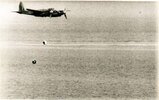
Trial of the initial spherical bouncing bomb dropped from a FW190 in Leba, Pomerania (In present day Poland, Leba was a rocket testing site)
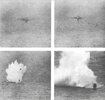

Kurt trials xgbb.jpg

There is a movie on Youtube of this trial youtube.com/watch?v=J1JBYIClEd0
www.youtube.com/watch?v=J1JBYIClEd0

And of the trial of the rocket propulsed model (a rare color short take) at youtube.com/shorts/Yc4Ftx2Cmls
www.youtube.com/shorts/Yc4Ftx2Cmls

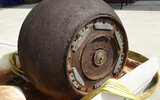
Heavy retouched photograph of the later model
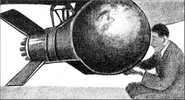
1706368322_120_Kurt-Bouncing-Bomb.jpg

tail fin kurt 2.jpgmodified tail fin Kurt2.jpg

Test reports in teh Bundesarchive::

Tests of the Kurt bouncing bomb conducted between July and August 1944.
RL 36/86; Page: 424, 464, 480
invenio.bundesarchiv.de/invenio/direktlink/b2b7a313-243b-47b5-acd0-961ecdc43be8/

Tests of the Kurt bouncing bomb conducted at the E-Stelle Travemünde between September and November 1944. A Focke-Wulf 190 was used for the tests.
RL 36/24; Page: 28, 32, 86, 88
invenio.bundesarchiv.de/invenio/direktlink/65287e47-879c-445e-9324-f9c33c7ef8a6/

 
Last edited:
Hi Dreamk
As always, I have a lot of questions...Here is the first missing detail: there is no explicit mention of a specific motor designation—at least not one that appears in secondary sources (Russian or American). If anyone has different information, please feel free to add to or correct what I’ve said...The same source as the image in the first post states that the motor—specifically the motor chamber—was taken from the SG 500 RS project.The propellant grain has three distinct dimensions...As for the nozzle (or nozzles), the question of whether it originated from a different project remains open.So, if anyone has an opinion on this or can offer a correction, please share it...On one hand, the source provides detailed specifications that couldn't simply be determined by holding the specimen in your hands; yet, on the other hand, it fails to mention the designation that is clearly marked on the motor itself—which is quite strange.The manufacturer is not Wilhelm Schmidding (Bodenbach), as this motor does not appear in their inventory lists or technical drawings—which comes as a surprise to me. My guess is that the design is by RhB, and it was likely manufactured at one of the RhB plant's branches.
Akon
 
Concerning the rocket propulsion:
The rocket powered version used a rocket motor from a Bordrakete RZ 100 heavy air-to-air/ air-to-ground rocket, replacing the warhead with the spherical bomb ("Kugelbombe").
This rocket had 18 venturi nozzles inclined at an angle to provide spin stabilization.
The Kugelbombe/RZ 100 assembly proved unsuitable because the sphere retained the rotational movement transverse to the flight path and when it hit the water it deviated to starboard, completely missing the target.
Rheinmetall engineers decided to eliminate rotation by modifying the angle of the venturis
(A similar problem had already been solved by the Luftwaffe when it converted the spin-stabilized artillery rocket W.Gr.28 into the fin-stabilized air-to-ground 14 WKBS Brandschrapnelrakete. The W.Gr.28 base was replaced by another in which the venturis were drilled a zero-degrees pitch and four fins were fixed to the rocket engine.)
The new design, called the SB 800 RS Kurtbombe, was provided with a new 555-mm diameter cylindrical section located between the sphere and the rocket engine. This section contained a pneumatic operated gyroscope stabilizing unit (which would have been run up before the bomb was dropped) to give the missile directional stability and the explosive bolt which severs the warhead from the propulsion unit.
The box tailplane assembly was fitted around the nozzles section, to maintain the flight altitude, one elevator preset to an angle of 7-degrees was gyro-controlled.
When the OKL decided to cancel production of the heavy airborne rocket RZ 100 the Kurt project was closed down in November 1944.

The development of the RZ 100 began in 1941 when Rheinmetall-Borsig tried to develop an air-to-ground and air-to-air rocket with an extremely large warhead, intended to achieve increased fragmentation effect and hits against intended targets even with inaccurate aiming.
Only one ground firing test was conducted from a broken fuselage of the Me 210, which resulted in considerable damage to the fuselage; this ended the development of spin-stabilized onboard rockets, and it was hoped that a more reliable weapon could be developed with tail-stabilized onboard rockets.
Towards the end of the war, work was underway at Rheinmetall-Borsig in the WKL department under the direction of Dr. Lambrich and Dr. Vüllers on the Bordrakete 100 (Bordrakete 100) in the M, MS and BS versions; however, these trials could not be completed.
Two variants of the RZ 100 were developed.
The first, 1.474m in length, was propelled by a solid- propellant diglycol rocket charge weighing 82kg having 18 discharge nozzles distributed over two concentric rings each of 9 nozzles, inclined at an angle to provide spin stabilisation,
The second, of slightly increased length and diglycol weight, had the propelling nozzles divided for spin stabilisation into a larger ring of 12 angled nozzles and 45 smaller ones inset within the outer ring.
 
Last edited:
Hi LEI-15-HG
Weapon: An aircraft/bomb operating on this principle was primarily intended for use against surface targets that lacked heavy armor below the waterline—targets that could not be approached for conventional bombing due to strong anti-aircraft defenses, let alone by submarines or torpedo craft entering the harbor. This assumes the targets were stationary—a state that typically lasts for only a very limited period.When we consider this primary purpose alongside the timeframe in which the weapon was designed, tested, and potentially ready for operational deployment, a likely target emerges: supply convoys, or the ports where they were being loaded. England, for one, would have had no need for such a weapon. Deploying it would require suitable aircraft and would entail a host of challenges—not to mention the inevitable, effective countermeasures from the adversary.Another possibility is its use against dam walls—in regions where breaching a dam could halt the advance of enemy troops or disrupt hydroelectric power generation.Had such a weapon been deemed necessary, it would have been granted priority in terms of production capacity and material allocation; however, given the situation in 1943–1944, there were clearly other, higher priorities.
Akon
 
Neither the Bordrakete RZ 100 nor the SB 800 RS Kurtbombe passed the stage of preliminary testing. They were never used operationnally.
The fact that Rheinmetall began the production of a batch of 560 warheads, indicate that they were confident that even if the RS 100 solution was a failure, the Kugekbomb could be used alone, as in the test movie of the Fw190.
BTW pay attention to the fact that 2 Kugelbombe are released simultaneously by the Fw190 - the whole design is highly reminiscent of the "Highball" bouncing bomb development and testing trials at Loch Striven - here too the British produced no less than 200 "Highball" bouncing bombs for these testings only. The Mosquito used in these testings was similarly equipped to drop a pair of Highball bombs simultaneously.

Highball mosquito bayTXGQ4KE8WG6NTD477BZ4.jpgHighball drop of a pair by a mosquitol.jpg

highball 2.jpg
Highball Bouncing Bomb bouncing-bomb-barnes-wallis-rafbf-892.jpg
 
The figure of 300 units comes from a Russian source (likely the interrogation of technical personnel)—he probably just threw out a number between 1 and... well, you know.The question is whether these test and experimental units were ever recovered from the sea, or if they are still there to this day :) My guess is the latter.So, the possibility of them being found—for instance, by getting caught in a fishing net—cannot be ruled out.
Akon
 
Yes indeed, the "Highball" on the photograph I uploaded was one of the 2 samples recovered by divers from Loch Striven in 2017. The bombs carried no explosives as it was a test run, but that the pistols were installed and tested with the inert rounds at the time. More than 200 Highballs were dropped into the loch back in 1943 as part of a test run by the Royal Navy with many settling in more than 50m of water. The 2 recovered samples were found laying at a depth of 35m (120 ft).

Whether the Polish authorities (or enthusiasts) have made diving explorations of Lake Łebsko or intend to do so..........well, in 2019 a teamof divers from SeaTerra company, who were working as subcontractors for the Świnoujście-Szczecin fairway channel modernization project, found a Tallboy embedded at a depth of 12m in the Piast Canal near Świnoujście. Polish Navy divers from the 12th Minesweeper Squadron of the 8th Coastal Defence Flotilla detonated it. Maybe someone on this forum is in contact with them and can ask whether they have info on "Kurt" remnants.
Lake Łebsko (located in present-day northern Poland within the Słowieński National Park) and the surrounding sand dunes near Łeba served as a major German military testing ground during World War II. This area was primarily used for launching and testing experimental rocket-propelled weapons, aviation prototypes, and missiles.
After the war the training ground was taken over by the Soviet army. Then, in the years 1967-1974, the Poles operated on the same area the Polish Rocket Survey Station Łeba, carrying out tests of meteorological rockets. There is now a museum there dealing with the ww2 and post ww2 period testings: the Muzeum Wyrzutni Rakiet, or the Rocket Launcher Museum. Maybe worth contatcing them too,
 
Last edited:
Top