What's new
British Ordnance Collectors Network

Join over 14,000 collectors of inert military ordnance. Get expert identification help for shells, fuzes, grenades, and more — plus access our classifieds marketplace and decades of archived knowledge. Free to register, takes seconds.

US 2.75" Rocket ID needed.

917601

Well-Known Member
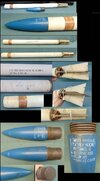
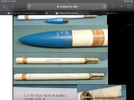
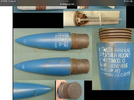
I have this MK 40 rocket with a MK1 Mod 0 Dummy marked warhead. The rocket is easily dated to 1970, but the Dummy warhead is not clear to me, dated 1968?

Is it of Navy, Air Force or Army origin? All info appreciated.
 

Attachments

  • IMG_1792.png
    IMG_1792.png
    3.7 MB · Views: 36
  • IMG_1781.jpeg
    IMG_1781.jpeg
    98.1 KB · Views: 35
  • IMG_1790.png
    IMG_1790.png
    2.6 MB · Views: 34
The distortion makes it tricky but I think it’s actually Mk61 Mod 0, which lines up with an Air Force rocket warhead
Wow, you are good. If so, is the rocket motor correct for the warhead? In other words, not a mix and match put together?
Not much detailed info on the internet, or any manuals I can find. Thank you in advance.
 
If we can trust AI, you are correct noting MK 61 Mod 0.

AI:
" The Mk 61 Mod 0 is a 2.75-inch training practice (TP) warhead used with folding-fin aerial rocket (FFAR) systems like the Mk 40 rocket motor. It simulates the ballistics and flight characteristics of standard 2.75-inch tactical service warheads during pilot and crew training exercises.

it gives nothing more, Air Force? Navy? but it mentions mating with the Mk 40 ( not Mk 66) motor. I would still love to find a TM reference confirming this.
 
More from AI:

"
The Mk 61 Mod 0 training practice warhead was used by all three branches—the Army, Navy, and Air Force—as part of a unified, joint-service logistics system for the 2.75-inch Folding-Fin Aerial Rocket (FFAR).[1, 2]
While it was cross-compatible across services, the naming convention reveals its specific design origins:
  • Design Origin (Navy): Under the standard U.S. military ordnance designation system, the "Mark/Mod" (Mk/Mod) nomenclature belongs historically to the U.S. Navy. Components developed natively by the Army typically use the "M" designation (such as the equivalent M151 high-explosive or M274 practice warheads). [1, 2]
  • Widespread Deployment: Despite its Navy designation roots, the Mk 61 Mod 0 (a simple 5-pound inert steel casting meant to replicate the weight and ballistics of a live warhead) was adopted heavily across branches. It was utilized by:
    • The Army and Marine Corps on attack helicopters (like the AH-1 Cobra) firing from Mk 40 rocket motors.
    • The Air Force on tactical ground-attack aircraft (such as the A-10 Thunderbolt II or older F-4 Phantoms) firing from high-speed Mk 4 rocket motors. [1, 2, 3, 4
 
Ugh, AI (LLM,s etc.) is not something I trust. It does not have true intelligence yet, and as such it cannot tell what is right from what is wrong. What it does is take the most the mostly strongly linked result or results to your query and spouts that out. This is all well and good when all source material is linked and can be cross checked, and when the source material is correct, when it isn't true, well it's poop in poop out.

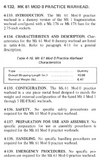
As to the MK 61 MOD 0 practice warhead, in this case the 'AI' models have been trained on data that included the warhead in question. An example would be a publication such as the 1970 edition of NAVAIR-11-85-5, which covers airborne rockets. An excerpt (cropped screen shot) from page 4-15 of NAVAIR-11-85-5 is below.

NAVAIR-11-85-5 - Airborne Rockets - Page 4-15 (1970).png

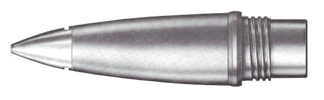
There's no image of the MK 61 MOD 0 practice warhead in that publication I'm sorry to say, but I've added an image of the fragmentation warhead that it emulates for reference. In this case it's the MK 1 MOD 5 fragmentation warhead, which is not a one-part construction like the MK 61 MOD 0 practice warhead.

NAVAIR-11-85-5 - Airborne Rockets - Mk 1 Mod 5 Fragmentation Warhead (1970).png
 
Agreed on AI reference sourcing. Thank you for the solid reference. 1970 edition of NAVAIR-11-85-5. I found a place for it in my War room.
 

Attachments

  • IMG_9668.jpeg
    IMG_9668.jpeg
    2.2 MB · Views: 7
  • IMG_9669.jpeg
    7.1 MB · Views: 5
  • IMG_9670.jpeg
    7.1 MB · Views: 3
Top