British Ordnance Collectors Network
You are using an out of date browser. It may not display this or other websites correctly.
You should upgrade or use an alternative browser.
You should upgrade or use an alternative browser.

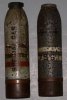
1
18pounder
Guest
Thanks Dickaren,Danno good pics!anyone like to add to our chemical arsenal??
18pounder
18pounder
thejavelinman
New Member
Nice job, the only thing is that this would be a blue cross shell and not yellow cross (mustard)

More for the chemical arsenal
18Pdr,
Here's a few more to add.
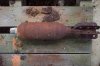
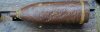
65lb Light cased aircraft bomb - UK - This was mustard filled, didn't contain any explosive charges and just burst open on impact with the ground.
4.2" Mortar - UK - Mustard fill, hex nut visible on the tail, very strong indication of either CW or Phos fill, 152 DA fuze.
4.5" Shell - UK - Mustard fill (This particular projo), side filler plug not visible, 106 DA fuze.
18Pdr,
Here's a few more to add.
65lb Light cased aircraft bomb - UK - This was mustard filled, didn't contain any explosive charges and just burst open on impact with the ground.
4.2" Mortar - UK - Mustard fill, hex nut visible on the tail, very strong indication of either CW or Phos fill, 152 DA fuze.
4.5" Shell - UK - Mustard fill (This particular projo), side filler plug not visible, 106 DA fuze.
1
18pounder
Guest
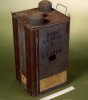
Chemical container bomb (clock!)
Peteblite
at first glance I thought it was a carridge clock!!
Very unusual design,I supose it didnt need to be 'bomb shaped'to do its job-never seen one before.
Peteblite
at first glance I thought it was a carridge clock!!
Very unusual design,I supose it didnt need to be 'bomb shaped'to do its job-never seen one before.
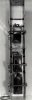
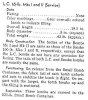
Here's a bit of info on the 65lb ACB.
If these things are ever recovered they tend to be completly rusted out due to their light weight construction.

Der_Feldgraue
Well-Known Member
Great job on the yellow cross shell!
Here is a german 77 mm long green cross shell I restored recently.
http://i35.tinypic.com/2natxc4.jpg
http://i35.tinypic.com/2pr9vz4.jpg
http://i35.tinypic.com/27yab9k.jpg
http://i37.tinypic.com/md117o.jpg
http://i33.tinypic.com/zmyyk8.jpg
http://i34.tinypic.com/125j03n.jpg
http://i34.tinypic.com/dxxmwx.jpg
Here is a german 77 mm long green cross shell I restored recently.
http://i35.tinypic.com/2natxc4.jpg
http://i35.tinypic.com/2pr9vz4.jpg
http://i35.tinypic.com/27yab9k.jpg
http://i37.tinypic.com/md117o.jpg
http://i33.tinypic.com/zmyyk8.jpg
http://i34.tinypic.com/125j03n.jpg
http://i34.tinypic.com/dxxmwx.jpg

Der_Feldgraue
Well-Known Member
Thanks. I will post some more pics in the next days.
Btw. I am seaching for a more or less good german HZ05 (Haubitzznder 05) for 10,5 cm shrapnels.
Btw. I am seaching for a more or less good german HZ05 (Haubitzznder 05) for 10,5 cm shrapnels.
Der_Feldgraue
Well-Known Member
1
18pounder
Guest
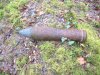
Here the long 7,7 cm shell with EKZ16 somewere on the battlefield of Verdun in France. Never touch anything like this!!!
quite rare to see this fuze not rusted to mush..
keep em coming
ive PM'ED you
18pounder

outstanding
What an outstanding piece of work.
Congrats,
Joe
What an outstanding piece of work.
Congrats,
Joe

Bottle on e bay.
This could be what you need to go inside it.
Dave.
http://cgi.ebay.co.uk/WW1-GERMAN-GL...Militaria_LE?hash=item3a545b3a00#ht_500wt_990
This could be what you need to go inside it.
Dave.
http://cgi.ebay.co.uk/WW1-GERMAN-GL...Militaria_LE?hash=item3a545b3a00#ht_500wt_990

Der_Feldgraue
Well-Known Member
Good picture!
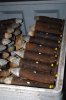
I think there was only one bottle size for the 77 mm bluecross and the remaining space in the shell was filled with cast FP02 to destroy the bottle and disperse the filling of it.
I think there was only one bottle size for the 77 mm bluecross and the remaining space in the shell was filled with cast FP02 to destroy the bottle and disperse the filling of it.
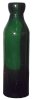
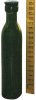
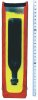
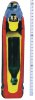
Here are the two sizes of bottle for 7.7cm. The purpose of the bottle was to cool the heat of the explosion, so that the agent was not completely destroyed. The Germans fired more than 13,000,000 blue cross projectiles during the war, making it by far the most use CW of the war. The idea was that the small molecule would act as a mask breaker, the sneezing/vomiting effect of the agent then forcing the soldiers to remove their masks, then lethal gases would follow. In truth, it was rarely effective or noticed at all. the Allies considered it worthless, but Germany persisted. It is still the most commonly recoverd old chemical weapon in France and Belgium today.