What's new
British Ordnance Collectors Network

This is a sample guest message. Register a free account today to become a member! Once signed in, you'll be able to participate on this site by adding your own topics and posts, as well as connect with other members through your own private inbox!

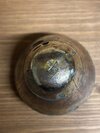
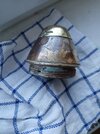
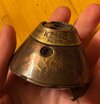
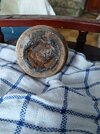
Chemical Kz 14 with cross stamp on the cap

Hi everyone , recently i got my hand on this piece , some of the members already have similar chemical fuzes , and have shown them before , now i want to share mine. It comes from Ypres region.

Heres a Kz 14 fuze that belonged to the K.gr 15 green cross shell. From my perspective.


My thesis is Brass fuses were used from 1914 to 1916 (atleast this what we ,(my collegues and I) got statistically from digging on the eastern front on the northen side , there are least full brass fuzes used after august 1916 , moving to the december , january , february there are other material combinations could be obtained on the fields commonly c (brass and steel , or zinc alloy and steel caps , wich are most common). I know that this emprical experience and it depends on the exact supply chain for the armies but heres an argument The 77.kgr 15 appeared in 1916 and received the green cross designation on May 19, 1916, according to various sources. The cross may have been cold-stamped on the cap. (I dont know how often it was done to assume the rarity , but i know that its not common amongst big collections)
There is no punching on the rim as in description of the k.gr grkz 15 shell from notes on german shells 1918. And there are no deformations from rupture , also the leftovers of magnesia cement can be seen on the thread and the gas escape hole is stuffed.1000078822.jpg1000079387.jpg1000079381.jpg1000079389.jpg1000079384.jpg
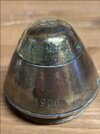
I believe the fuse belonged to the k.gr 15 grkz.
Manufacturer: AEG 15.
Moreover, this is most likely an early model used in the shell, as zinc fuses were later used in larger quantites , eventhought they can be obtained starting from the 1915 , got some examples.
An alternative to this shell only arrived in April 1917.
By the way, the 77mm, according to the description, also had a green cross painted in oil paint on the bottom of the shell (data from February 1917) from russian northen front headquaters from the operation that germans took place in the february 1917 under Riga.

So , what you guys think , share chemical fuzes for the photo collections and those who have exsact production numbers not just a general trend , correct me! , Stefan is currently busy and unfortunatly cannot give a detailed answer .

I was hunting for such fuze for 6 years , ever since i started digging walked hundreds of square kilometers and now the Precious is in my hands.

Also i give an example of the punching on the rim for this fuze from the same manufacturer.

Also Eod guys i know that lfk gr are more common and the fuzes are zink with iron...? But if u had experience finding early green cross shells , what materials did fuzes have?

Regards! :)005.JPG
 
Last edited:
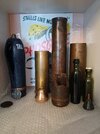
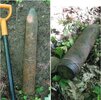
Also heres my humble collection of chemical artillery relics , this is what i keep on the shelf.
The 3inch russian chemical shell had leftovers of blue paint all over the body , wich isnt typical for the 3inch blue shells , but ive got letters from the batteries and descriptions that blue coloring had variations over the time.
If You guys want i can tell about them what i found myself on the sector that bellonged to august 1916 18th to 21st.

I even got the dog tag of the 3inch battery that was located in the area and they had chemical shells in their arsenal at the time of the operation.

The dog tag have been found in the same region.
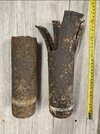
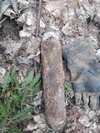
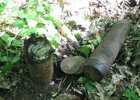
Whats even more cooler that one of the 3inch chemical shells didnt exploade and had stuck at the angle that resembled the distance of the range tables for such shells that it was fired +- from the same location where my battery was , and it even had same angle of direction as the location of the battery.

ive got other 3inch chemical leftovers from the same location and il post the variations of deformed fragments , there are diffrent levels of deformations wich is interesting.
1000079385.jpg
 
Ive never found an exploded k.gr 15 grkz shell , ive seen how lange field canon granate look like of the chemical origin.
does steel used in kgr 15 grkz had enought plasticity or it just shatters?
screenshot_20230807-181354_ebay-jpg.207924
 

Attachments

  • Screenshot_20230807-181354_eBay.jpg
    Screenshot_20230807-181354_eBay.jpg
    559.3 KB · Views: 96
  • Screenshot_20260130_161819_Gallery.jpg
    Screenshot_20260130_161819_Gallery.jpg
    1 MB · Views: 14
Also heres a photo of the dug out green cross 1 from one of the Easter Europe forums.
Picture is old , and not many have seen it.
 

Attachments

  • Screenshot_20260130_162033_Gallery.jpg
    Screenshot_20260130_162033_Gallery.jpg
    616.6 KB · Views: 37
  • Screenshot_20260130_162050_Gallery.jpg
    Screenshot_20260130_162050_Gallery.jpg
    791.1 KB · Views: 37
Hi everyone , recently i got my hand on this piece , some of the members already have similar chemical fuzes , and have shown them before , now i want to share mine. It comes from Ypres region.

Heres a Kz 14 fuze that belonged to the K.gr 15 green cross shell. From my perspective.


My thesis is Brass fuses were used from 1914 to 1916 (atleast this what we ,(my collegues and I) got statistically from digging on the eastern front on the northen side , there are least full brass fuzes used after august 1916 , moving to the december , january , february there are other material combinations could be obtained on the fields commonly c (brass and steel , or zinc alloy and steel caps , wich are most common). I know that this emprical experience and it depends on the exact supply chain for the armies but heres an argument The 77.kgr 15 appeared in 1916 and received the green cross designation on May 19, 1916, according to various sources. The cross may have been cold-stamped on the cap. (I dont know how often it was done to assume the rarity , but i know that its not common amongst big collections)
There is no punching on the rim as in description of the k.gr grkz 15 shell from notes on german shells 1918. And there are no deformations from rupture , also the leftovers of magnesia cement can be seen on the thread and the gas escape hole is stuffed.View attachment 207918View attachment 207919View attachment 207920View attachment 207921View attachment 207922
I believe the fuse belonged to the k.gr 15 grkz.
Manufacturer: AEG 15.
Moreover, this is most likely an early model used in the shell, as zinc fuses were later used in larger quantites , eventhought they can be obtained starting from the 1915 , got some examples.
An alternative to this shell only arrived in April 1917.
By the way, the 77mm, according to the description, also had a green cross painted in oil paint on the bottom of the shell (data from February 1917) from russian northen front headquaters from the operation that germans took place in the february 1917 under Riga.

So , what you guys think , share chemical fuzes for the photo collections and those who have exsact production numbers not just a general trend , correct me! , Stefan is currently busy and unfortunatly cannot give a detailed answer .

I was hunting for such fuze for 6 years , ever since i started digging walked hundreds of square kilometers and now the Precious is in my hands.

Also i give an example of the punching on the rim for this fuze from the same manufacturer.

Also Eod guys i know that lfk gr are more common and the fuzes are zink with iron...? But if u had experience finding early green cross shells , what materials did fuzes have?

Regards! :)View attachment 207928
For reference
 

Attachments

  • Screenshot_20260119_000337_ReadEra.jpg
    Screenshot_20260119_000337_ReadEra.jpg
    418.1 KB · Views: 28
  • Screenshot_20260118_235630_ReadEra.jpg
    Screenshot_20260118_235630_ReadEra.jpg
    78.8 KB · Views: 28
  • Screenshot_20260118_235846_ReadEra.jpg
    Screenshot_20260118_235846_ReadEra.jpg
    899 KB · Views: 27
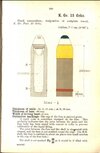
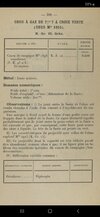
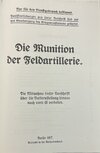
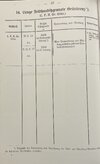
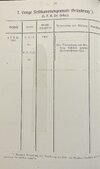
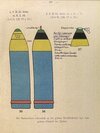
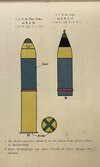
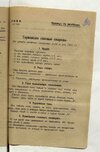
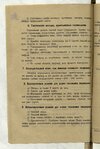
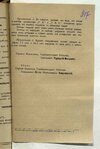
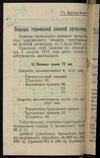
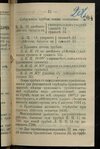
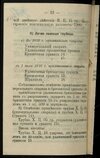
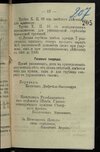
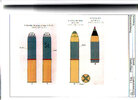
For your information, from a German handbook.
 

Attachments

  • IMG_0606.jpeg
    IMG_0606.jpeg
    931.7 KB · Views: 16
  • IMG_0605.jpeg
    IMG_0605.jpeg
    940 KB · Views: 15
  • IMG_0604.jpeg
    IMG_0604.jpeg
    1 MB · Views: 19
  • IMG_0602.jpeg
    IMG_0602.jpeg
    1.1 MB · Views: 19
  • IMG_0601.jpeg
    IMG_0601.jpeg
    1.1 MB · Views: 20
For your information, from a German handbook.
Thank you for your correction.
So the colour marking isnt blue and yellow , but rather grey and yellow? As the original k.gr 15 , i just skipped the name of the shell wich is lfk gr , but its visibaly in diffrent form , it looks like repainted k.gr 15 rather than long shell.
 
Last edited:
Thank you for your correction.
So the colour marking isnt blue and yellow , but rather grey and yellow? As the original k.gr 15 , i just skipped the name of the shell wich is lfk gr , but its visibaly in diffrent form , it looks like repainted k.gr 15 rather than long shell.
I mean i have russian headquater document of july 1916 that states : recent gas shells of 77 and 105mm where painted blue with yellow heads. Hence if its July 1916 and K.gr 15 grkz and 105mm grkz where introduced almost simoultaniously in may 1916 , first usage recorded in the 5th may , by deminest number 7 data , and the green cross marking was added in may 23th , its not a long time of shell usage to be replaced with a long version , hence the colour marking mentioned earlier may be true.

What you guys think?
 

Attachments

  • 00001454.jpg
    00001454.jpg
    387.1 KB · Views: 17
  • 00001455.jpg
    00001455.jpg
    400.8 KB · Views: 17
  • 00001456.jpg
    00001456.jpg
    337.5 KB · Views: 17
So i clarified my documents with more attentivnes , and wread paper of Mr Belot.
The k gr 15 grkz was replaced as the 7.7 mm long H.e was introduced , and in upcoming short period of time chemical long shell was introduced. Maybe simultaniously (idk)
(Long H.e mentioned in inter front messages from July 1916 ).
So in conclusion , the topics green cross Kz 14 could have belonged to either one of the shells , because long chemical also had Kz 14 with magnesia and the cross stamp.
But im not sure for how long the fully brass fuzes where used. Im just assuming by subjective experience on the fields.

If You dear members have something to add , i would be glad to get a new knowledge.
If any require proper photos of the fuze (propper background) send personal message.
 

Attachments

  • 00000309.jpg
    00000309.jpg
    174.7 KB · Views: 3
  • 00000310.jpg
    00000310.jpg
    188.7 KB · Views: 3
  • 00000311.jpg
    00000311.jpg
    172 KB · Views: 2
  • 00000312.jpg
    00000312.jpg
    171.3 KB · Views: 2
Top