
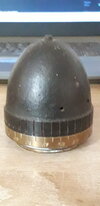
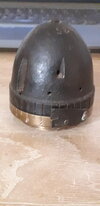
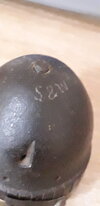
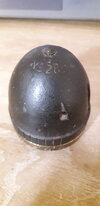
I can't find anything about this fuze or the maker, can anyone help, what shell it goes on and the initials S&W, thanks
British Ordnance Collectors Network
You are using an out of date browser. It may not display this or other websites correctly.
You should upgrade or use an alternative browser.
You should upgrade or use an alternative browser.
number 28 fuze
- Thread starter earni74
- Start date
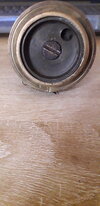
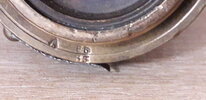

Fuze ID Help
Hello, I have a small WWI era ordinance collection and recently got out a couple of (as yet) unidentified pieces to see if they really are of WWI vintage. Any advice would be appreciated. I thought this first one might be a fuze for a mortar round (Stokes?). It is impressed with "No.28" and...
www.bocn.co.uk
No28 sutton fuze ??
I believe this relic is a no28 sutton fuze, all the documents i have say this fuze did not enter service untill 1917,now if these docs are correct this is clearly dated 1916 am i right assuming this due to where it was found (an old ww1 uk mortar round trialling area) that its possibly one of...
www.bocn.co.uk

It's fully described in my book - "An Illustrated Technical Guide to British WWI Fuzes". Pictures and drawing attached.I can't find anything about this fuze or the maker, can anyone help, what shell it goes on and the initials S&W, thanks
Attachments
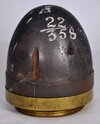
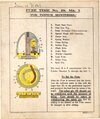
Well spotted! I think you have found a mistake, both in my book and in the original cataloguing of the info in the source (The Royal Artillery Museum). There was a lookalike fuze produced in 1917 which looked identical to the No. 28, which was the No. 79. There was a slower burning fuze and a consequential increase in the time ring makings from 0-16 to 0-22. I will check out my sources!Small difference in the graduation range. (At least) 18 on the photo, 16 on the drawing.
Depotman. (See my Book!)

So maybe No 28 fuzes graduated to 22 in collections are converted fuze No 79 with old cap engraved 28.
I think there is an example here : https://www.bocn.co.uk/threads/fuze-id-help.95453/#post-278344
I think there is an example here : https://www.bocn.co.uk/threads/fuze-id-help.95453/#post-278344